Revisiting the Past & Shaping the Future
Public Art at 400 George Street, Meanjin/Brisbane
Written by Benjamin Clay, Associate, UAP
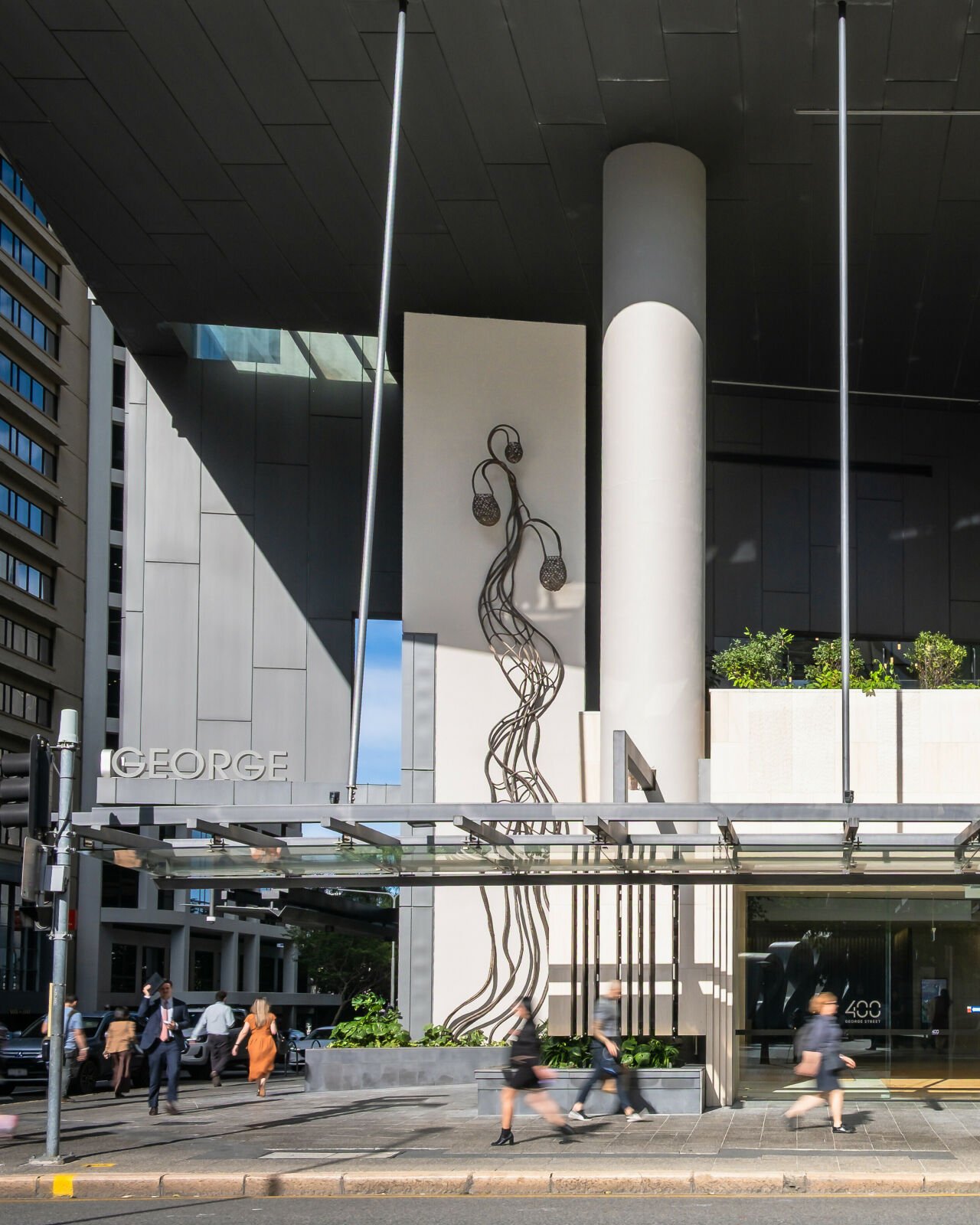
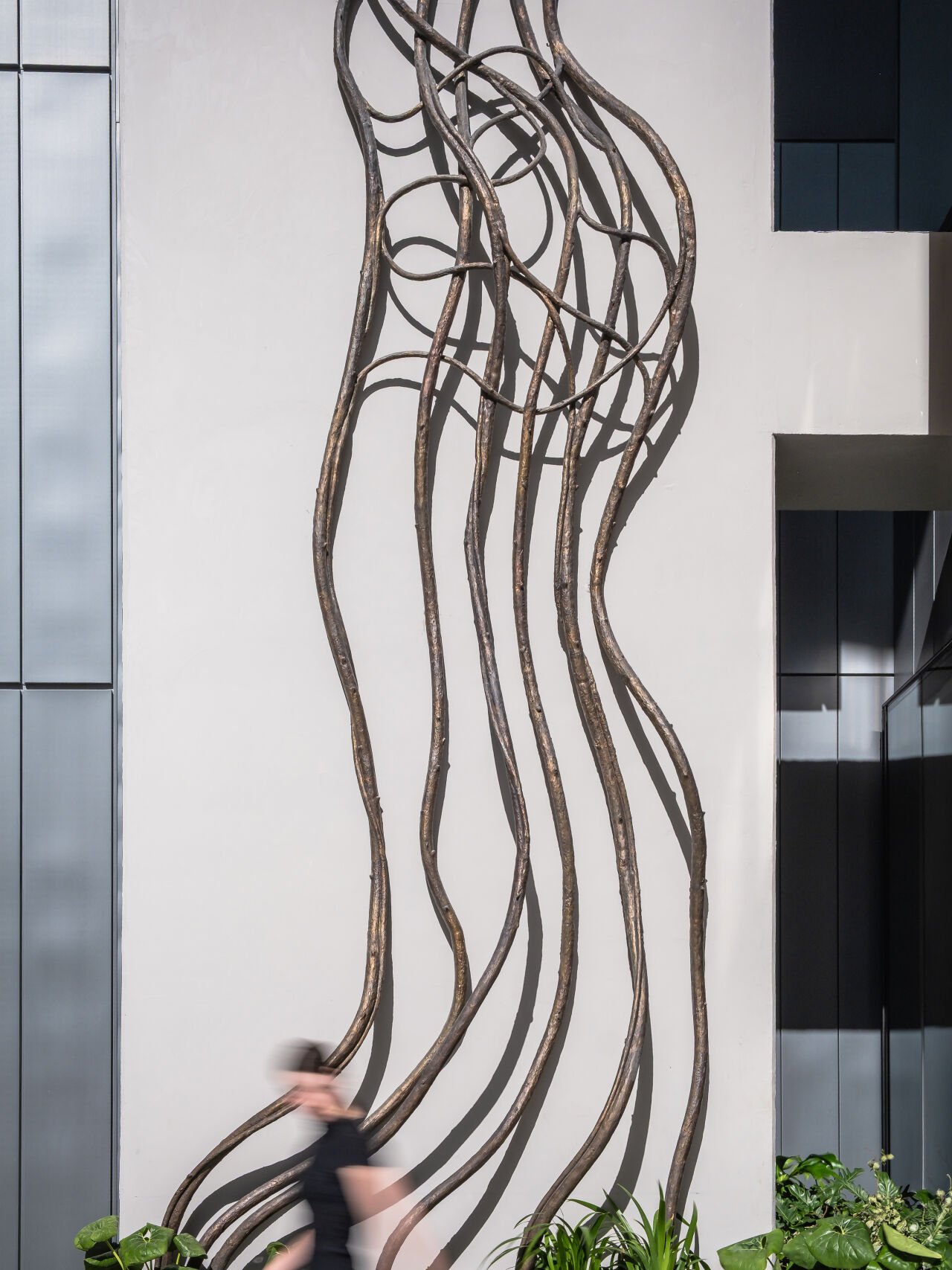
While some public art projects are the first of their kind for a particular site, others emerge in response to, or in place of, earlier commissions. This was the case in Meanjin/Brisbane at 400 George Street, where Sonja Carmichael’s Talwalpin durenma dutta, 2026 (Hibiscus tilliaceus cotton tree grows strong), now rises more than ten metres tall as a proud declaration of continuous First Nations custodianship.
Before Carmichael’s poetic interpretation of the Talwalpin plant came to scale the building’s forecourt column, a previous architectural program by COX (circa 2009) had integrated three publicly accessible artworks by similarly esteemed artists. These works were not compromised by structural damage or safety concerns, common reasons for deaccessioning public art. Instead, they responded so thoughtfully to the original building’s plan that its evolving needs required their removal to enable improved amenity for the decades ahead. UAP was invited to undertake the sensitive role of decommissioner before a new site-specific response could be developed.
The removal or relocation of significant public artworks is rarely straightforward. Beyond maintaining the physical condition of the works, the process must also uphold the trust and comfort of the artists involved. It typically begins with a review of existing contract documentation to determine whether decommissioning provisions were established at the time of a work’s creation. When present, these terms guide the next steps for both the landowner and the artist. In their absence — often the case for artworks developed prior to the widespread adoption of public art standards promoted by organisations such as NAVA and Arts Law — best practice involves approaching the artists or their estates directly to understand their preferences and priorities for removal.
Artists are generally given the first right of refusal to receive their works back, a decision often shaped by scale, materiality, and the practicality of storage, reinstallation, or resale. At 400 George Street, each of these outcomes occurred, with the artists electing respectively to repurpose, donate, and resell elements of the works. Construction records may also reveal the original value of the commissions, a detail that becomes particularly important where council-mandated public art frameworks require replacement works of equivalent value, adjusted for inflation. The evolving life of public art is evident here, where creativity continues to shape and reshape the built environment as urban development opens new opportunities for dialogue. In this spirit, UAP is proud to be currently working alongside two of the three artists originally commissioned for George Street to realise artwork concepts for sites in Brisbane and Sydney now nearing completion.
While carefully administering the decommissioning process, UAP also authored an Artwork Brief that articulated the ambitions of incoming stakeholders within the parameters established by the new architectural vision. The brief introduced the cultural context of the site, acknowledging its civic prominence alongside key infrastructure including the Supreme and District Courts. It also positioned the project within Meanjin’s rich public art landscape, in dialogue with works such as Fiona Foley’s Witnessing to Silence (2005), Daniel Templeman’s Confluence (2004), and Yayoi Kusama’s Eyes Are Singing Out (2012).
The curatorial vision, Reimagining Landscapes, was crafted to serve as a source of inspiration for the artists responding to the brief and to situate their proposals within broader conversations about the site’s evolving identity. Artists were encouraged to reflect on the layered subtropical planting that would soon frame the forecourt and to draw inspiration from nature’s determination to revive in the wake of urbanisation. Three potential locations were identified for creative exploration: two towering supporting columns and a street-facing planter bed capable of hosting an array of discoverable sculptural elements.
UAP’s Natasha Smith and Tess Bakharia curated a longlist of artists in response to the brief, considering the project’s thematic ambitions, spatial opportunities, and available budget. From this list, the stakeholder group selected three artists to participate in a competitive concept design process, led in-house by Adam France. The process yielded visionary proposals grounded in meaningful engagement with Meanjin’s ecosystems, histories, and communities.
Ultimately, it was Ngugi woman (Quandamooka people) Sonja Carmichael’s Talwalpin durenma dutta, 2026 (Hibiscus tilliaceus cotton tree grows strong), that was selected to progress, recognised for both the depth of its cultural narrative and the elegance of its response to the forecourt and street frontage. Carmichael’s established practice is celebrated for its contribution to contemporary fibre art discourses, while also providing a vehicle for the regeneration of ancestral weaving approaches. Her work is informed by extensive research into the holdings of Quandamooka weaving across Australia and internationally, and by a desire to expand these traditions for new and diverse audiences.
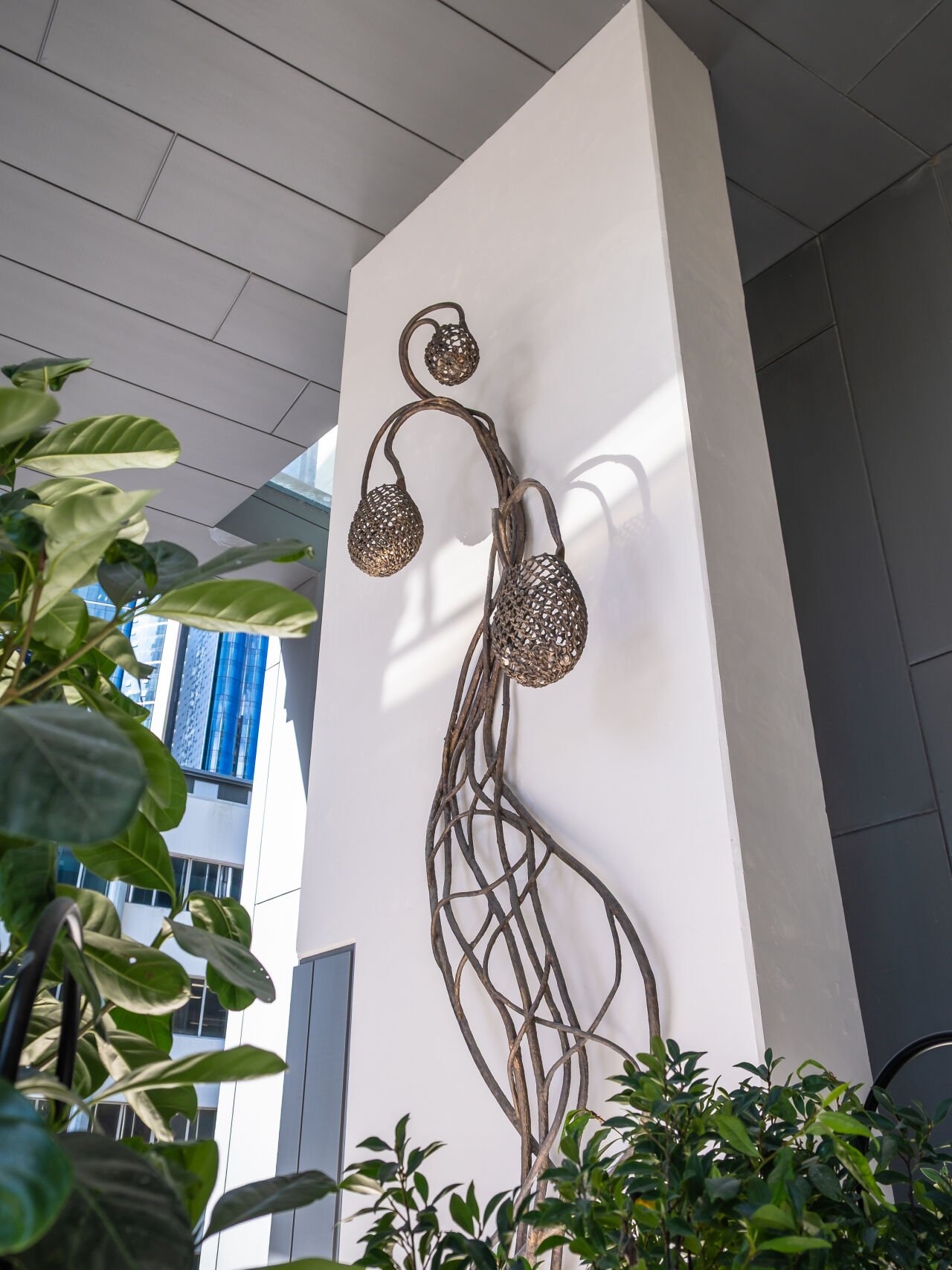
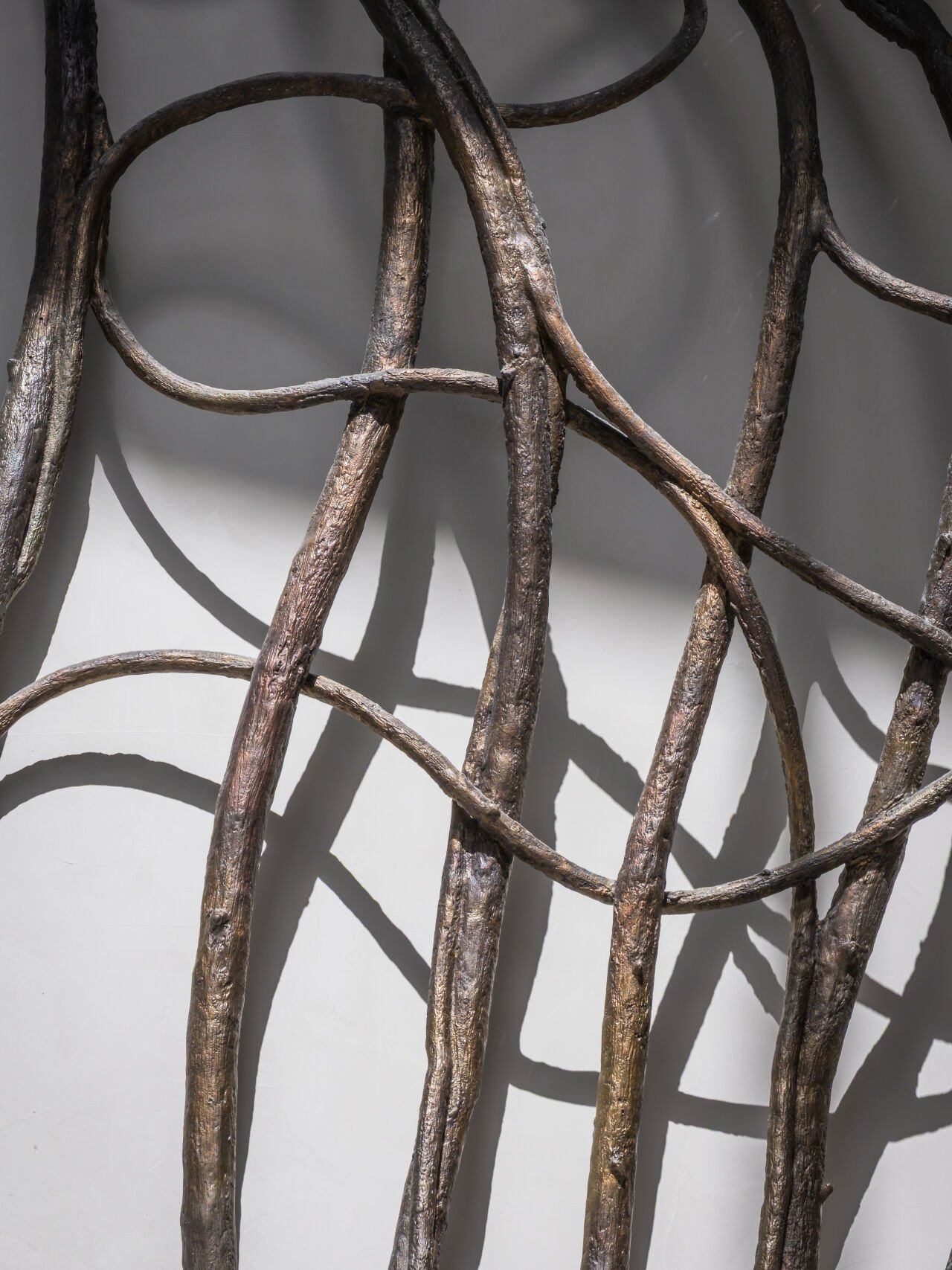
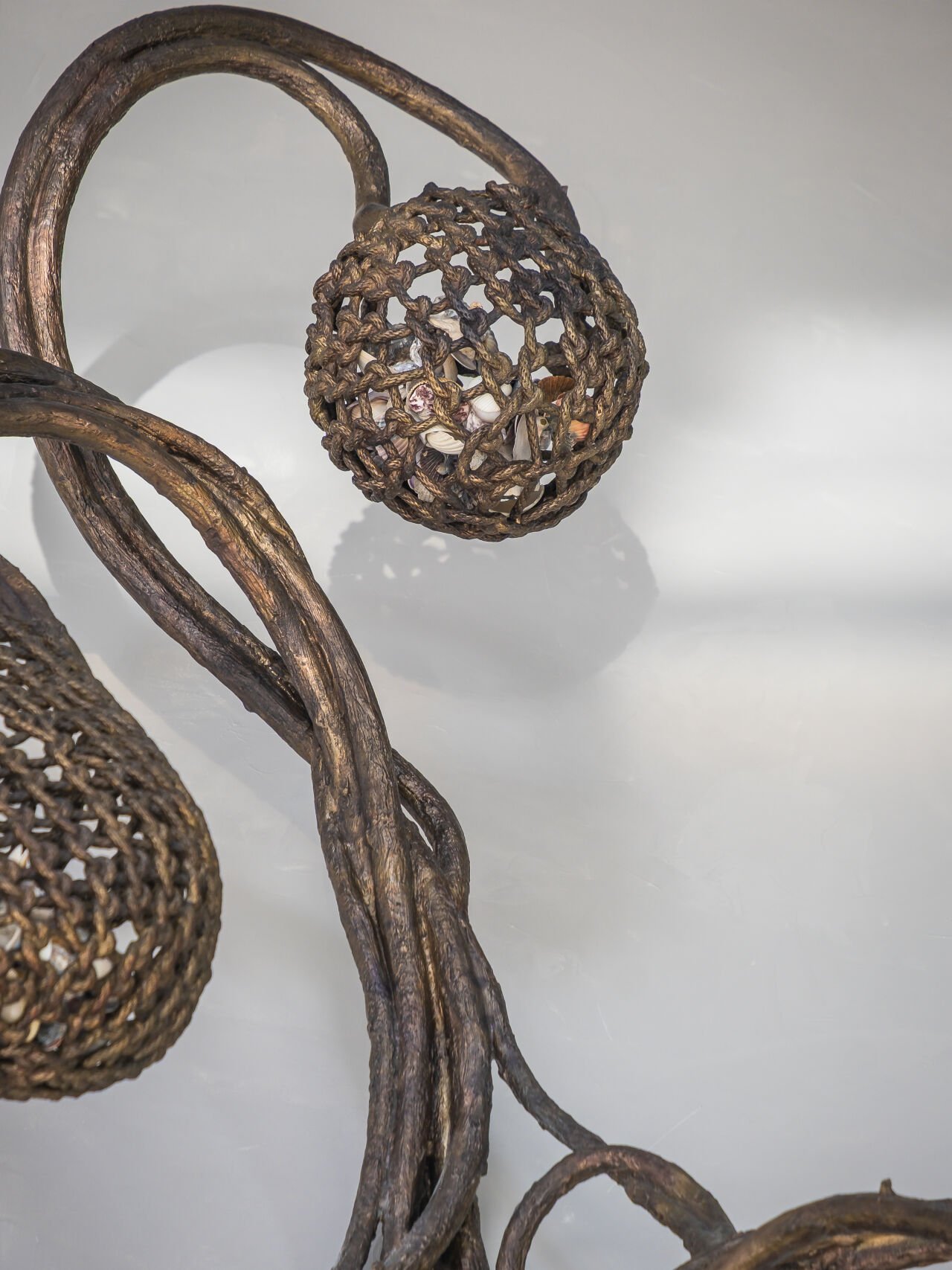
At 400 George Street, Carmichael honours human and non-human kin by tracing thousands of years of First Nations knowledge and connection to Country. The work references the Talwalpin (native cotton tree), a plant rich with associations valued for its fibre and sapwood used in weaving and medicine, and embedded within cultural stories shared by First Nations communities. Drawing inspiration from the interconnectedness of the tree’s spreading branches, the sculpture’s forms climb and weave skyward from roots grounded in the earth. The artwork unfolds across multiple elements including the primary tree-like sculpture, a scattering of fallen Talwalpin leaves cut from sheet brass and inlaid into the ground plane, and a singular dilly bag positioned within a mezzanine-level communal space. Together these gestures extend the experience of the work, inviting both distant admiration and close, tactile engagement.
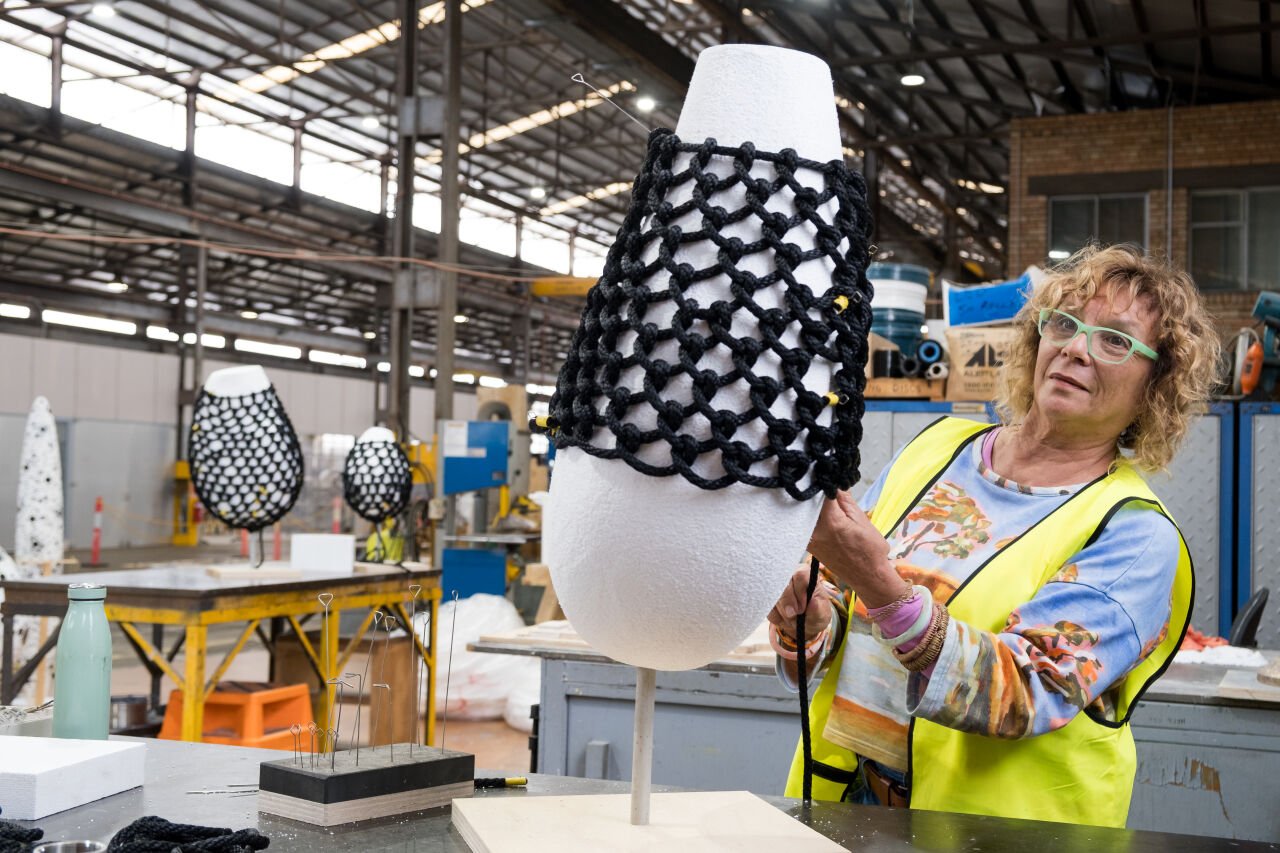
To realise the sculpture’s varied surface texture, samples of Talwalpin vine were brought into UAP’s Northgate foundry. There, the artist collaborated with experienced patternmakers to replicate the plant’s natural indentations using layered plasticine set over milled foam formwork. Carmichael also undertook weaving studies using rope, chosen for its legible detail at scale, to demonstrate the intended open structure of the sculpture’s woven form. Direct moulds were then taken for casting.
Assembled and finished in a rich tortoiseshell patina that combines deep bronze tones with subtle gold accents, the completed artwork now beckons audiences to the forecourt, inspiring curiosity, supporting wayfinding, and offering a new cultural landmark for the city. At the heart of Meanjin’s CBD, it recalls the ecosystems that flourished long before the city took form, while standing as a testament to the enduring resilience and resourcefulness of First Nations peoples. For Carmichael, “Talwalpin is a thread that connects us all.”
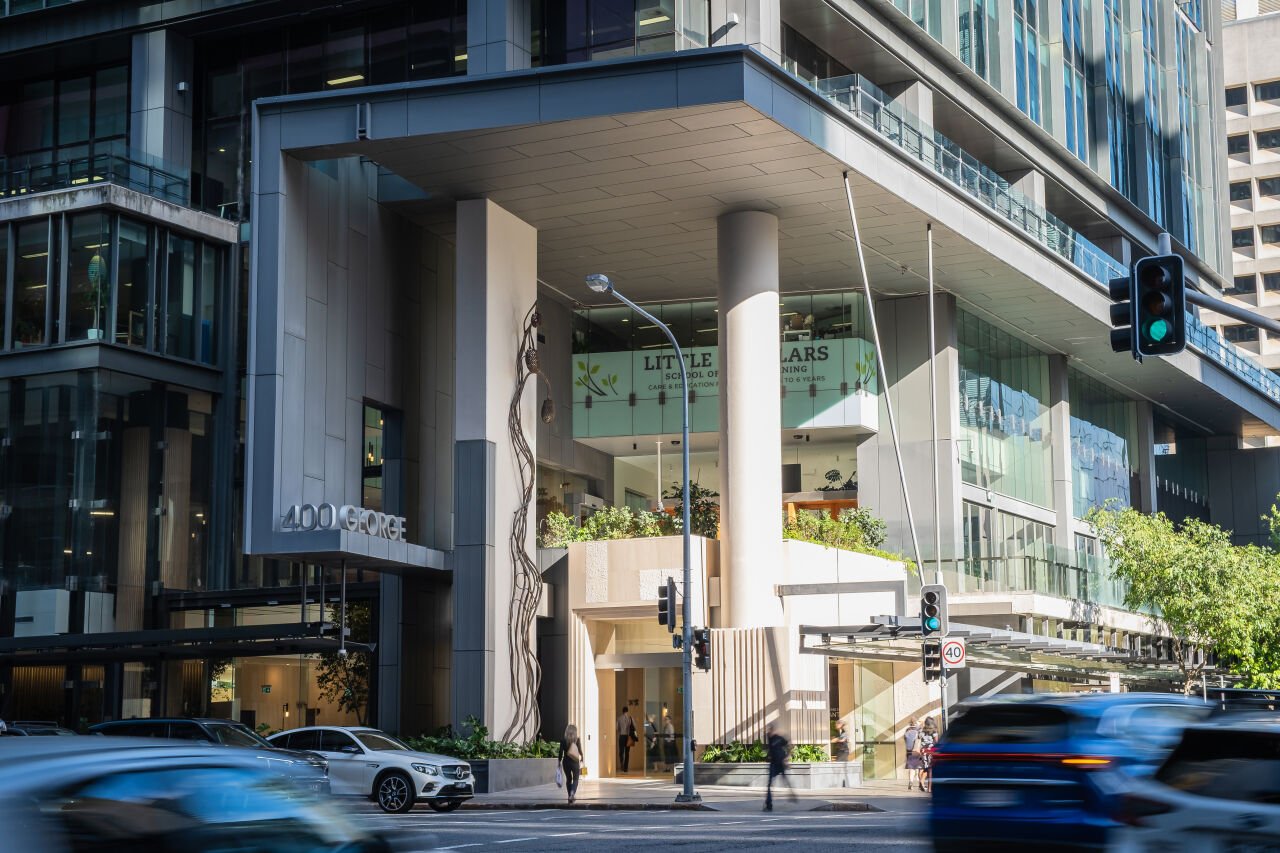
Sonja Carmichael, 'Talwalpin durenma dutta (Hibiscus tilliaceus cotton tree grows strong)
Sonja Carmichael is represented by Onespace.
UAP Team
Curator: Tess Bakharia
Curatorial Director: Natasha Smith
Designers: Adam France, Liam Vongmany
Technical Designer: Elise Thomson
Project Manager: Craig Turton
Estimators: Adam Meisenhelter, Barry Young
Patternmakers: James Lyall, Jerko Starcevic, Vernon Crowther
Foundry: Ben Smith, Jackson George, Jason Williams, Mark Morley, Mark Smith, Thomas O'Connor
Fabricators: Curtis Newport, Daniel Weldon, Keanu Renton, Luke Robinson, Martin Newman, Rodrigo Dos Santos, Shaun Hatchman
Finishers: David Chambers, Garry Lindsay, Kelvin Maletz, Kenneth Darker, Liam McCreesh, Shannon Briggs
Photography: Rachel See
#相关文章
A Celebration of Queensland's Flora and First Nations Culture
Artist Interview with Brian Robinson
Meet the Contributing Curators for Public Art Highlights 2024
UAP, in partnership with Artsy, is excited to announce the distinguished curators who will contribute to this year’s Best in Public Art.
Five Questions with Elisa Jane Carmichael
Quandamooka woman and multi-disciplinary artist Elisa Jane Carmichael was born in Brisbane. Her works draw inspiration from her salt-water heritage and her connections to country, building upon a foundation of cultural knowledge and practice that has been passed down by her family.