Public Art Highlights of 2025
Six Curators Present Notable Public Art Projects Shaping the Year
(New York, USA | December 1, 2025)— UAP highlights several noteworthy public artworks from 2025, recognizing the thoughtful practices shaping this year’s most resonant projects. Selected by six international curators, the highlighted works span regions around the globe and reflect the evolving role of public art in fostering cultural dialogue, deepening community engagement, and reimagining how people connect with shared spaces.
Natasha Smith, Director of Curatorial, and Principal Curator / Curatorial Manager Danielle Robson, at UAP have collaborated with an exceptional group of internationally recognized curators to spotlight the standout public art projects of 2025. This year’s contributors include Salamishah Tillet, Distinguished Professor of Africana Studies and Creative Writing and founder of New Arts, a public arts studio, at Rutgers University, Newark, and a Pulitzer Prize-winning critic at The New York Times; Amanda Abi Khalil, international curator, founder of TAP (Temporary Art Platform); Pojai Akratanakul, Bangkok-based curator, researcher, and project manager of Timor-Leste Pavilion at the 2026 Venice Biennale; and Deborah McCormick, a respected leader in arts management, public arts policy, and strategic cultural planning. Together, their diverse expertise brings a nuanced and deeply informed perspective to the public art themes that will shape 2025.
‘’This year’s cohort of contributing curators presents a powerhouse of women, leading in the arts and reporting from New York to Beirut and beyond. The artworks featured render this year of 2025 in a diversity of forms, colour, light, culture and beauty. The works speak deeply to us through a kaleidoscope of stories and expressions of the human condition and create opportunities for education and connection – a role that public art increasingly plays in our dynamic world. Enjoy the journey through these wonderful works by leading contemporary artists; from the subtle to the awe inspiring, each offers wonder and delight.’’
Natasha Smith, Director of Curatorial, UAP
Now in its ninth year, the initiative follows a considered, collaborative process that brings global expertise to the forefront. Each June, the team convenes a new group of contributing curators, who are formally engaged and briefed on the selection criteria by September. Nominations are submitted by early November and must feature artworks unveiled, launched, or opened within the calendar year that are freely accessible to the public for viewing. Over nearly a decade, this approach has enabled meaningful collaboration with 35 curators and the recognition of more than 64 artists worldwide, underscoring an ongoing commitment to celebrating impactful public art globally.
“This list highlights ten exemplary public art moments that emerged from the curators’ final nominations. Naturally, there are many other outstanding works not included; some unveiled after nominations closed for our 2024 list, others simply lost to the challenge of distilling a year’s worth of creativity into just one or two selections. Artists everywhere, whether featured here or not, continue to take the pulse of our times and reflect it back to us in ways that are as unexpected as they are profound.”
Danielle Robson, Principal Curator / Curatorial Manager
Full Project List with Commentary from Curators
Salamishah Tillet
Ja'Hari Ortega (b. Roxbury, Massachusetts, USA l. Boston, Massachusetts, USA) | Big Hoops to Fill, 2025
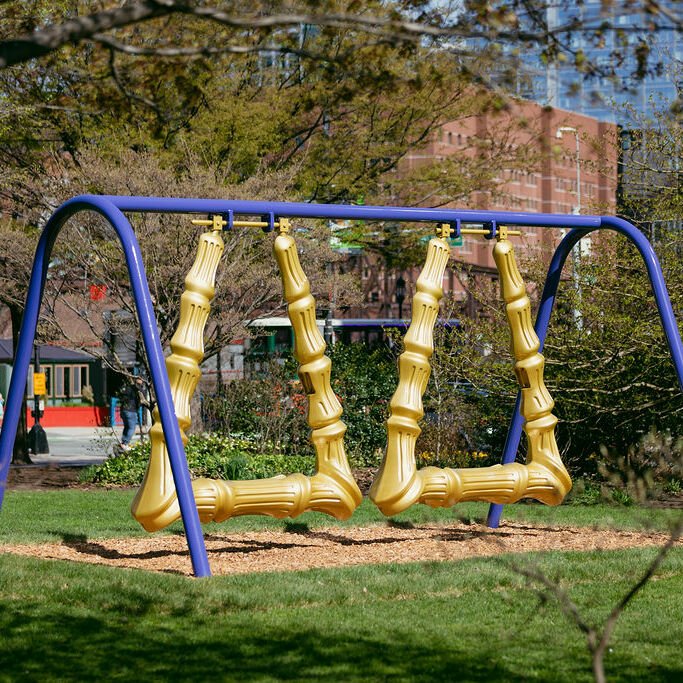
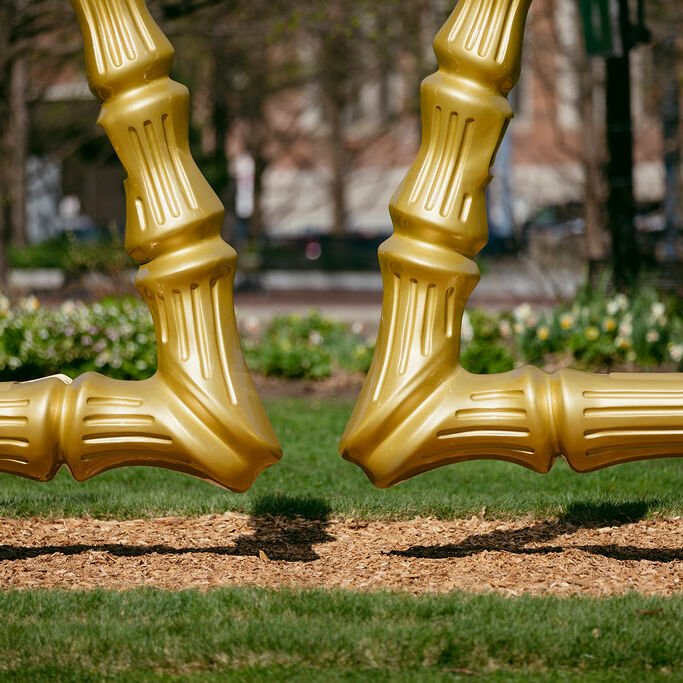
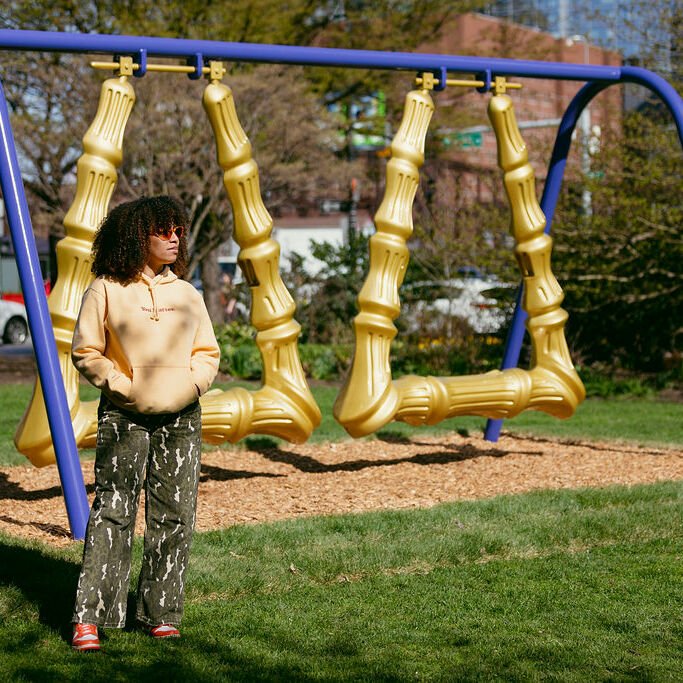
Big Hoops to Fill, Ja'Hari Ortega, 2025, Boston, MA, Photo Credit: Mel Taing https://www.meltaing.com/
Travel to downtown Boston until next October, and you’ll come across a large-scale sculpture I would never have imagined as a Black girl growing up in Dorchester in the early 1980s. Currently on display at the Rose Kennedy Greenway, you can catch Ja’Hari Ortega's Big Hoops to Fill, a functioning swing set in the form of gigantic gold bamboo earrings, or, as they are colloquially known, “door knockers.” Roxbury-born artist Ortega grew up mesmerized by the jewelry her mother adorned and shared with her. She also remembers how Black and Latinx girls and women popularized gold bamboo earrings within hip-hop’s early days.
Made of steel, resin, and fiberglass composite, epoxy paint, and polyurethane, Ortega’s 10-foot-tall monument recognizes the cultural significance of these earrings and rightly credits the mainly urban, working-class girls and women of color who wear them as critical artistic innovators and fashion influencers. Its iconicity is matched only by its practicality: it is an actual swing set with two built-in sets of handles, for children’s or everyday use. By infusing the public space with childhood memories, hip-hop culture, and opportunities to rest and play in a city known for its monuments, “Big Hoops” ambitiously puts Black and Brown girls at the center of Boston’s recent past and our current civic imagination.
Nekisha Durrett (b. and l. Washington, D.C.) Don't Forget to Remember (Me), 2025
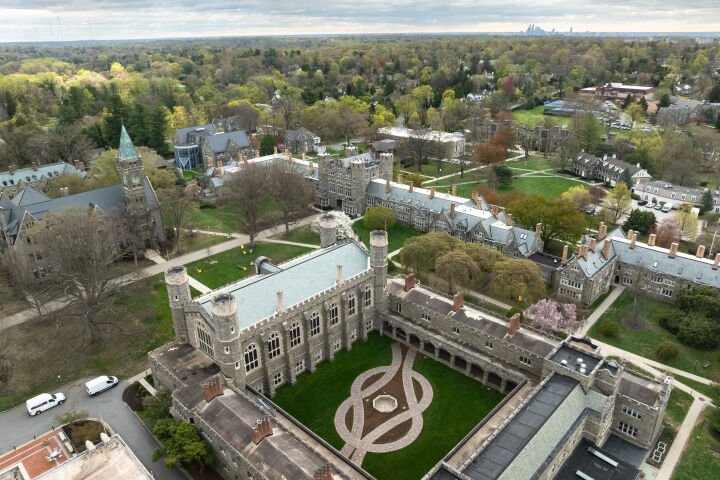
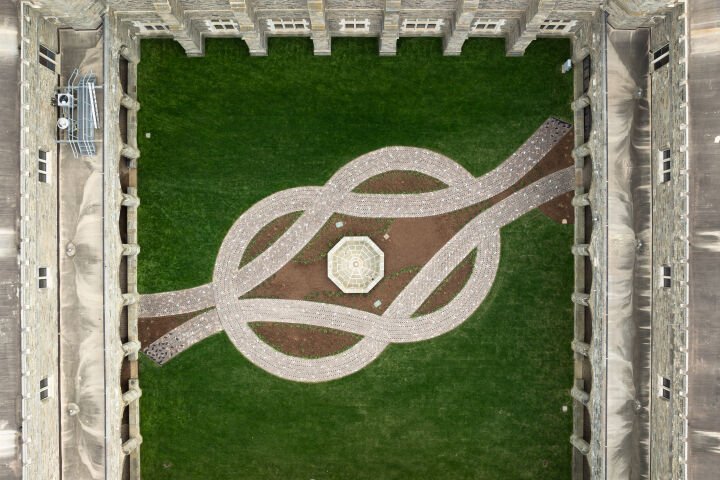
Nekisha Durrett, "Don't Forget to Remember (Me), Bryn Mawr College, ARCH Project, Bryn Mawr, PA, 2024 (Steve Weinik).
When Bryn Mawr College, a private women’s liberal arts college in Pennsylvania, admitted its first African American student, Enid Cook, in 1927, she was not allowed to live on campus. Finding housing off campus, she had to travel a mile to attend classes and was the only Black student enrolled there until she graduated in 1931. The only other African Americans she encountered were those hired to maintain campus grounds. Today, Cook’s name and those of other African Americans who worked as groundskeepers, housekeepers, waitstaff, and laundresses from 1900 to 1930 are inscribed on nearly 250 bricks, forming a monument to their lives.
Commissioned by Bryn Mawr College in partnership with Monument Lab, Nekisha Durrett’s Don't Forget to Remember (Me) is a winding brick pathway outside the Cloisters of Bryn Mawr’s Old Library. Woven together, the bricks form braids or plaited hairstyles. This symbol, alongside those bricks made of glass and designed to be lit up at night, invokes Cook’s body and her daily walk on campus, and insists on the remembrance of the many who labored and dedicated their lives to a college that neither they nor most of their children could attend. Subtle and yet sophisticated, Don't Forget to Remember (Me) engages the complex histories of racial discrimination, diversity, and desegregation in higher education by inviting all who walk on this path to never forget.
Amanda Abi Khalil
Shaikha Almazrou (b. and l. Dubai, UAE) Deliberate Pauses, 2025
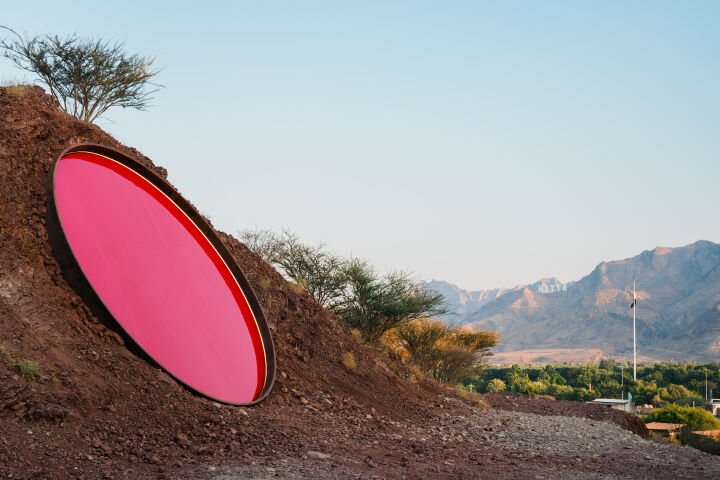
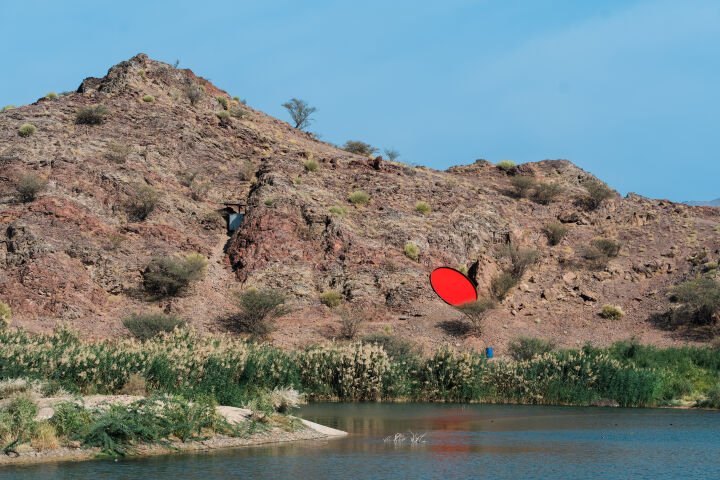
The work was curated by Faysal Tabbarah and commissioned by Dubai Culture and Arts Authority and Alserkal Arts Foundation.
Shaikha Almazrou’s Deliberate Pauses is a defining gesture in the evolving field of public art in the Gulf. Installed across the terrain of Hatta and Leem Lake, the work does not occupy the site, it converses with it. Five red reflective sculptures are dispersed across the mountains and hiking paths, entering into dialogue with the wind, the light, and the bodies that traverse them.
Globally, public art is increasingly shifting from object-based commissions toward situated practices that address ecology, access, and coexistence. Almazrou’s work embodies this shift. It rejects spectacle and decoration, the tropes that have often defined public art in Dubai, and replaces them with presence, attention, and reciprocity. The work is not an embellishment of the landscape but an activation of it, calling for a reorientation of perception.
In a context where visibility is often conflated with value, Deliberate Pauses invites another temporality, one of slowness, listening, and stillness as political gestures. It reclaims the possibility of public art as an environmental and affective act, grounded in both care and confrontation.
This work opens a necessary space for reflection. It asks how we might inhabit the landscape differently and what it means to pause deliberately within the urgencies of our time.
Laura Lima (b. Governador Valadares, Minas Gerais, Brazil l. Rio de Janeiro, Brazil) Indistinct Form, 2025
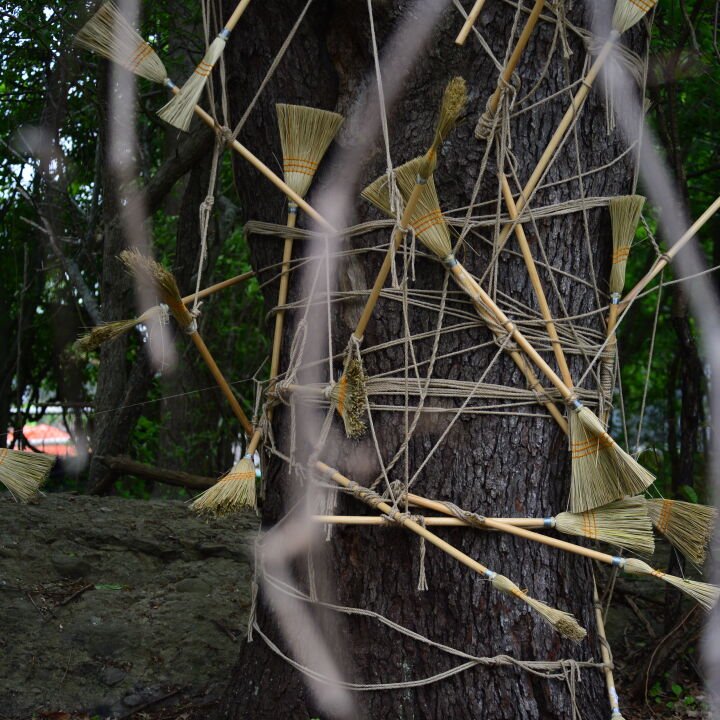
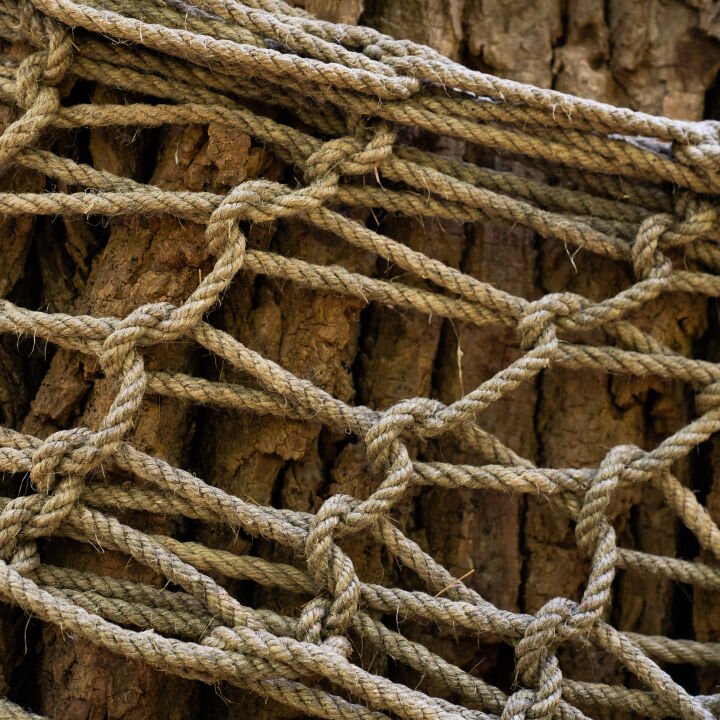
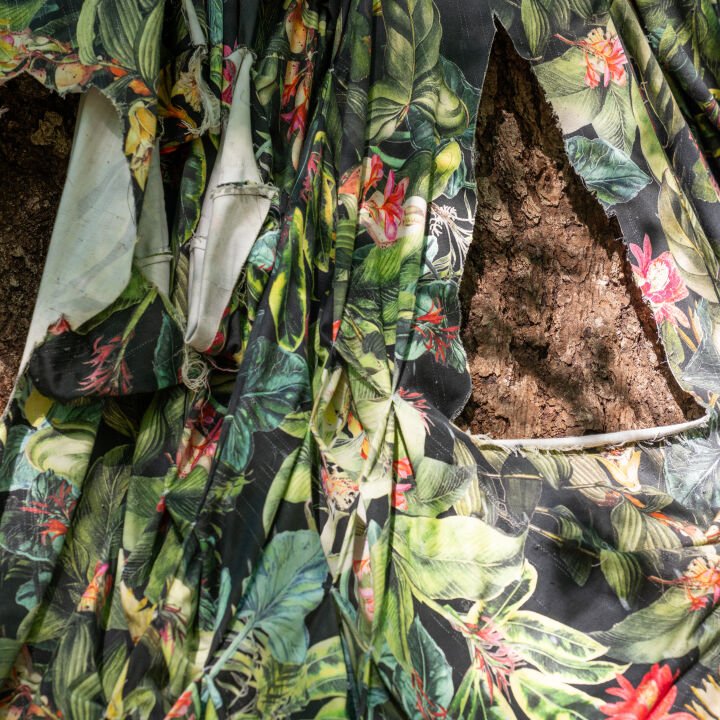
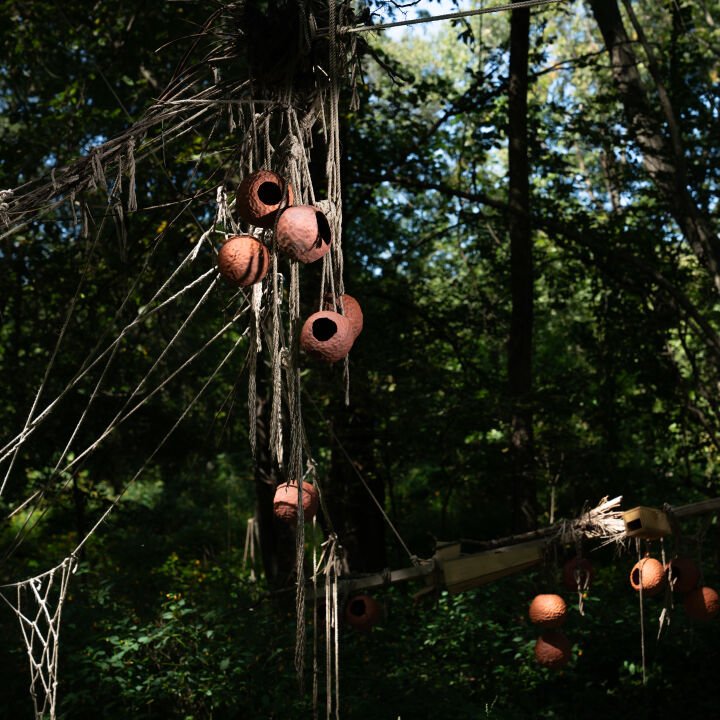
Laura Lima, Indistinct Form (Forma Indistinta), Installation View at Mass Audubon, Boston Public Art Triennial, May 22 - October 31, 2025. Photo: Kledia Spiro.
Laura Lima’s Indistinct Form expands the field of public art beyond the human gaze. Installed within the Boston Nature Center, the work redefines spectatorship by shifting attention toward the nonhuman. Lima creates sculptural environments not for people to look at, but for birds and woodland creatures to inhabit, occupy, and transform.
Working in close collaboration with wildlife experts from Instituto Vida Livre in Rio de Janeiro and the Mass Audubon Boston Nature Center, Lima designed a series of sculptural elements that function as both habitat and gesture. These forms, produced with local artisans in wood and ceramics, operate within a living ecosystem where authorship is shared and unpredictable.
In a moment when ecological discourse in art often remains metaphorical, Indistinct Form enacts a concrete redistribution of agency. It refuses the anthropocentric logic that situates nature as scenery or resource. Here, animals are not background or symbol, but cohabitants and witnesses.
This work is radical in its simplicity: it recognizes that the aesthetic experience is not exclusive to humans and that art can emerge from interspecies proximity, touch, and use. Within a global landscape of public art still driven by visibility and human-centered narratives, Indistinct Form proposes a more porous, ethical, and generous form of creation—one that listens before it speaks.
Pojai Akratanakul
Antony Gormley (b. and l. London, England) | Close, 2025
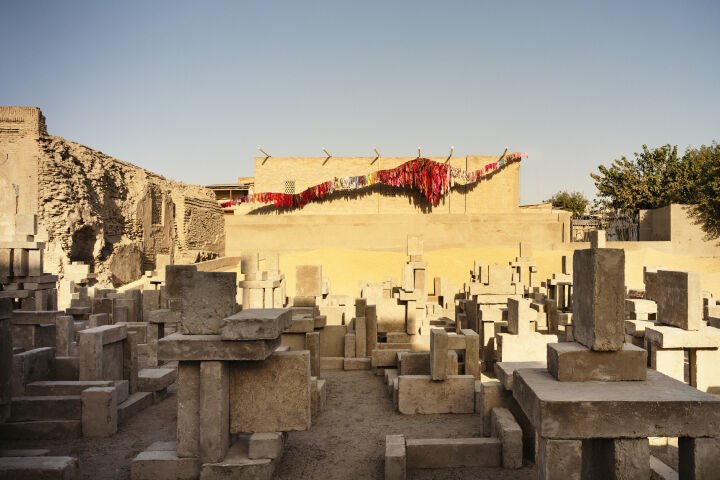
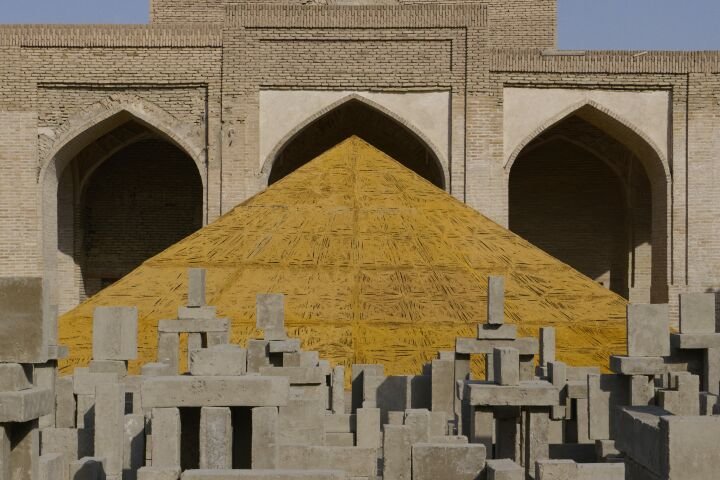
Image courtesy of the Uzbekistan Art and Culture Development Foundation; Bukhara Biennial Commissioner Gayane Umerova; Bukhara Biennial 2025 Artistic Director Diana Campbell
Commissioned by Gayane Umerova, chairperson of the Uzbekistan Art and Culture Development Foundation, and curated by Diana Campbell, the inaugural Bukhara Biennial, “Recipes for a Broken Heart” activates the historical UNESCO heritage city, once the heart of the Silk Road. The biennial offers a refreshing perspective by pairing contemporary artists with Uzbek artists and artisans who possess generations of passed down knowledge, placing contemporary art in dialogue with Bukhara’s deep cultural history.
Antony Gormley’s Close (2025), a collaboration with Temur Jumaev and local brickmakers, is one of the biennial's most ambitious site-specific commissions. Situated within the ruins of the Khoja Kalon mosque built in 1598, the work comprises 95 tons of unfired, sundried earth and straw. The bricks were hand-made to form ‘pixelated’ bodies, employing the same vernacular techniques of how buildings in the city were made. Visitors navigate the maze-like installation, encountering 100 sculptures in crouching, reclining, or meditating postures, compelling a close proximity and bodily engagement. Absorbing its heritage context, the artwork appears to transform throughout the day with the play of light and shadow. It extends Gormley's longstanding exploration of material physicality, the way parts come together as a whole, and his interests in human history, while addressing the idea of the body as a dwelling.
The experience is universal, appealing to audiences of all ages. It truly achieves what public art in a biennale setting is supposed to do, and not only connecting with the art crowds, but truly engaging with the site. It prompts visitors, whether local or international, to re-connect with their roots, and question how one co-exists, belongs, and takes part in history.
Tuan Andrew Nguyen (b. and l. Hồ Chí Minh City, Việt Nam) | Temple, 2025
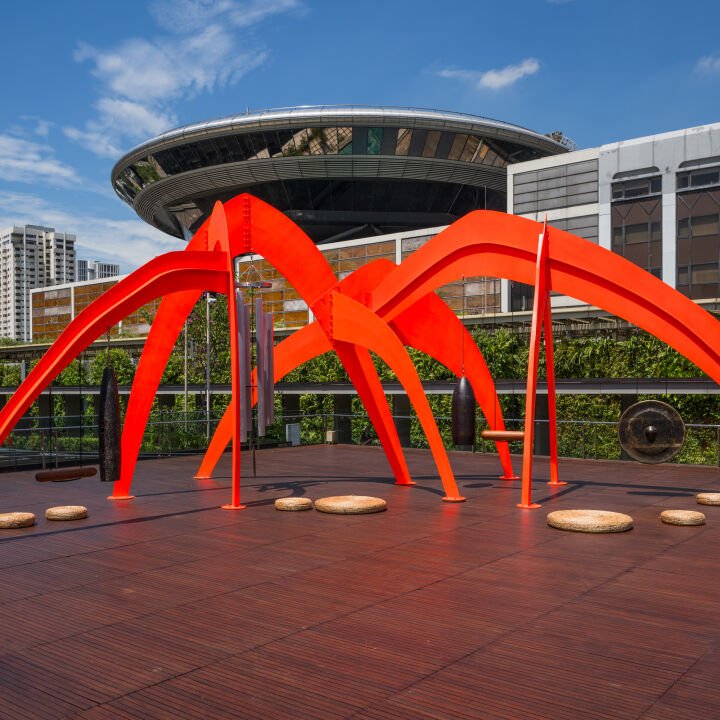
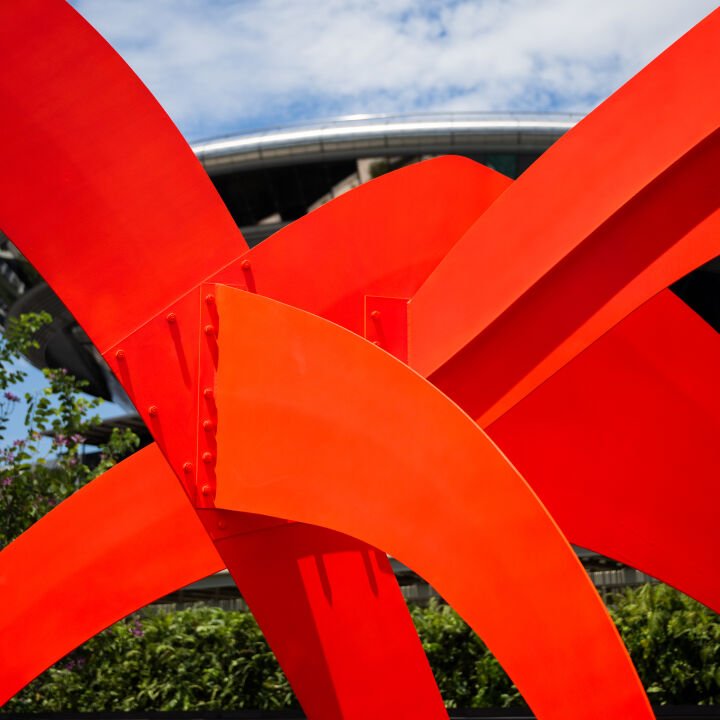
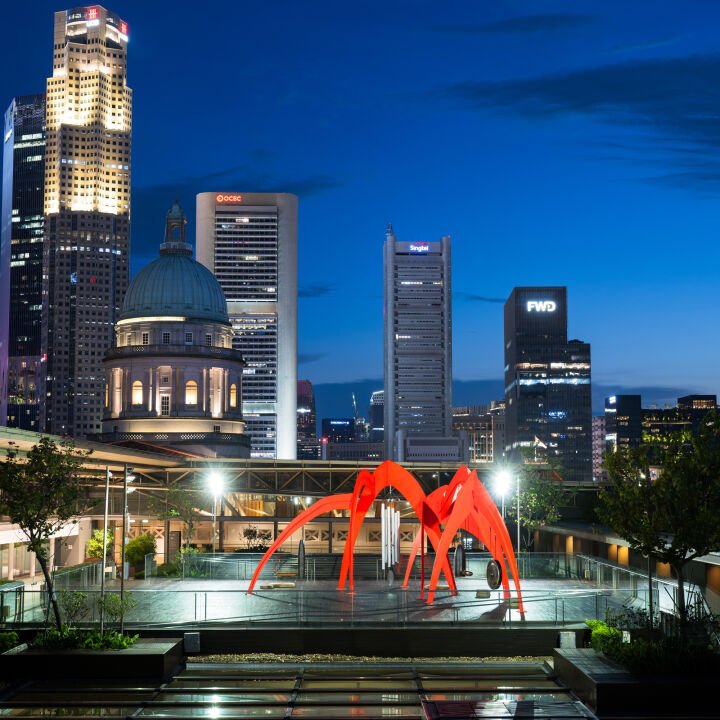
Tuan Andrew Nguyen, Temple, 2025. © Tuan Andrew Nguyen 2025. Courtesy of the artist and James Cohan, New York. Photo by Joe Nair.
Temple (2025) by Tuan Andrew Nguyen is a new sculpture commissioned for the Ng Teng Fong Roof Garden of the National Gallery Singapore, co-presented with the Singapore Art Museum at the launch of the 8th Singapore Biennale: pure intention.
Forming the foundation of this work, an abstract and geometrical bright red structure stands with extended curved legs made of industrial steel, evoking construction sites in one of Southeast Asia’s most vertical metropolises. Hung from these frames are six instruments—discs, chimes, bells, and gongs—that create an ambient soundscape, creating a meditative space. They are forged from alloys of unexploded ordnance (UXO) removed from the ground of Quảng Trị in central Vietnam. This material bears testament to the Vietnam War, which left countries like Laos and Vietnam as the most bombed areas in the world per capita. To this day, the remains of the two million tons of ordnance dropped in the 60s-70s still threaten daily lives.
Nguyen’s installation subtly demands awareness of this trauma. The instruments, tuned to frequencies believed to promote somatic healing, urge visitors to rest and listen, and perhaps spend time with the piece. Situated right in the center of Singapore’s civic district, the artwork calls for the attention of nearby high-rise dwellers and office workers, making visible the buried history of the war and unheard stories of loss, while making a new form from these remnants, thereby exploring a path towards restoration and peace.
Deborah McCormick
Judy Darragh (b. Ōtautahi/Christchurch, New Zealand l. Tāmaki Makaurau/Auckland, New Zealand) | Ether, 2025
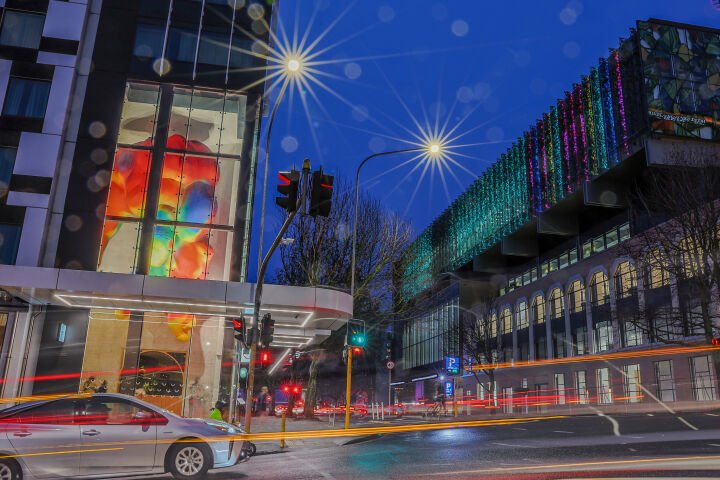
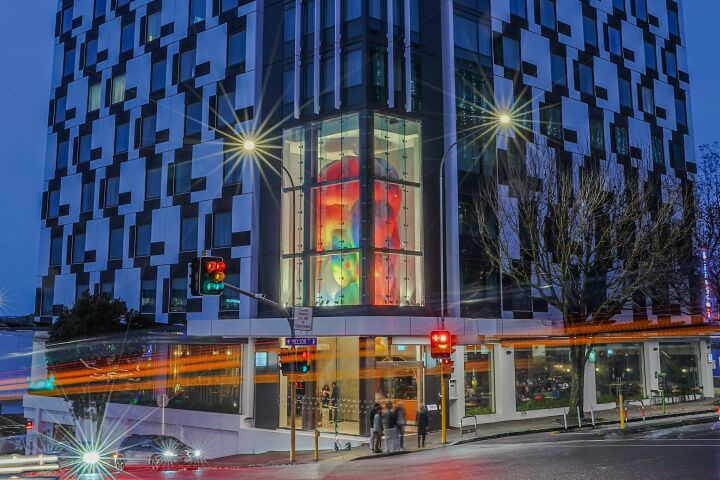
Image credit: Judy Darragh
Judy Darragh’s Ether celebrates the intersections of art, business, and the fine art of hospitality.
At 11 metres in length, Ether is an epic work for the 4.5-star hotel. It is the first permanent artwork of this type and scale in the country. The sculpture redefines the heart of New Zealand’s largest city with adventurous colour and form - appearing to escape from its glassed atrium. The sculpture includes a built-in fan to keep its form fully inflated and alive.
Judy is a maker of magical artworks that leave memorable impressions on viewers.
She says she wants us to “feel knocked out” when viewing this work. “When we look at art ... it should be something that is transformative.”
Commissioned by Sudima Auckland City Hotel, Ether takes its inspiration from its location. The hotel sits on Auckland city’s Nelson Street ridge, and Sunset, the rooftop bar, takes in dramatic views west over the Waitematā Harbour to the Waitakere Ranges.
The sculpture’s form and vividly fluorescent palette evoke the sun setting behind clouds.
Hotel guests are welcomed by Ether’s celebration of joyful colour upon arriving at reception. The sculpture enjoys high visibility from the street as a counterpoint to the hotel’s striking black-and-white façade. The form is illuminated to maximise visibility at night and during winter.
Judy Darragh is well known for her use of unconventional materials, bold colours, found objects and the reinterpretation of kitsch aesthetics, her works are in art galleries collections around the country.
While public art in Aotearoa New Zealand is a growing space, it’s an area dominated by men. Ether presents an opportunity to highlight women’s public art. Judy co-edited the Femisphere publication and has long advocated for better visibility for women artists. Ether is an outstanding contribution to an urban neighbourhood already notable for its public civic art, firmly anchoring the Sudima Auckland City hotel as a contributor to the location and community.
Mike Hewson (b. Ōtepoti/Dunedin, New Zealand l. Gadigal/Sydney, Australia) | The Key’s Under the Mat, 2025
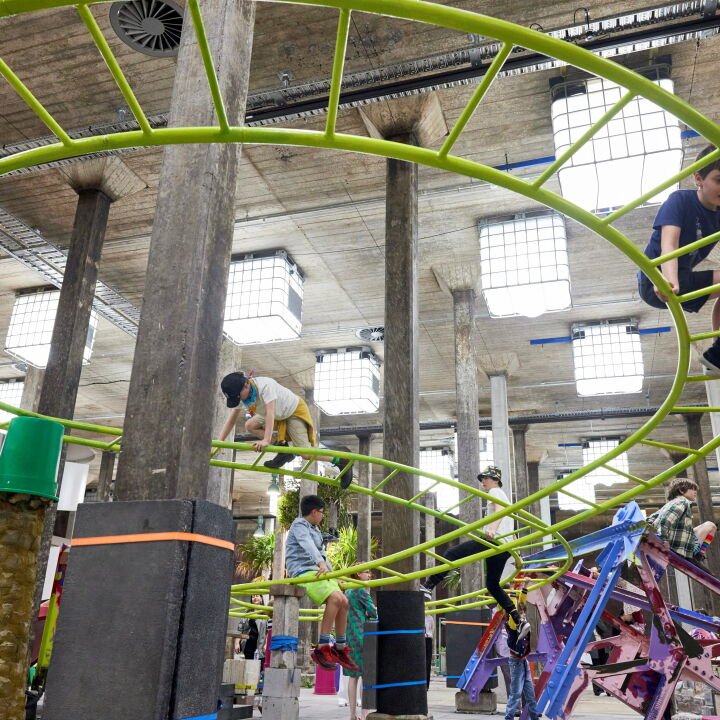
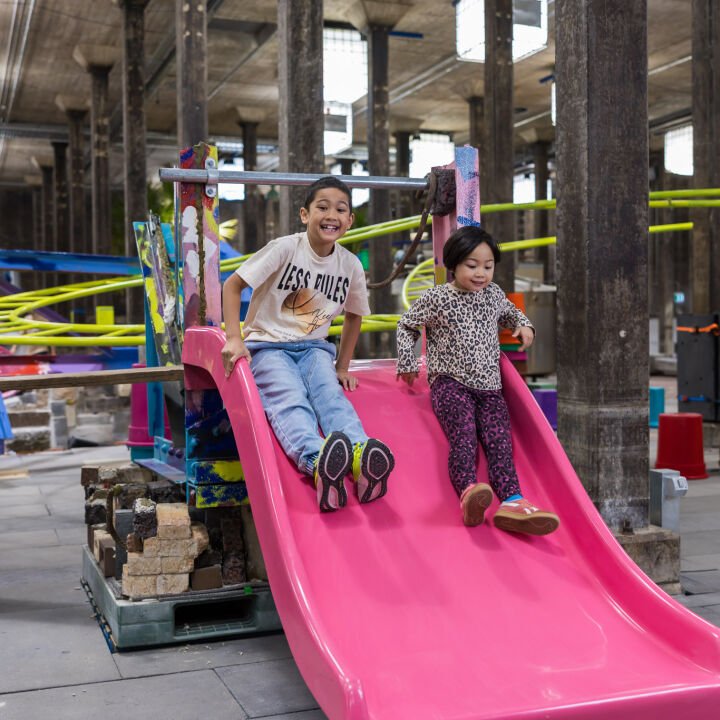
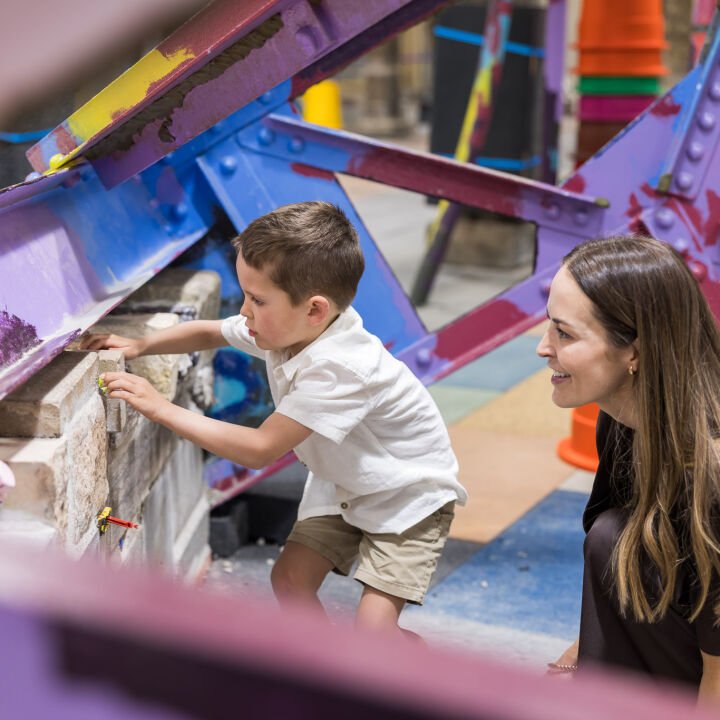
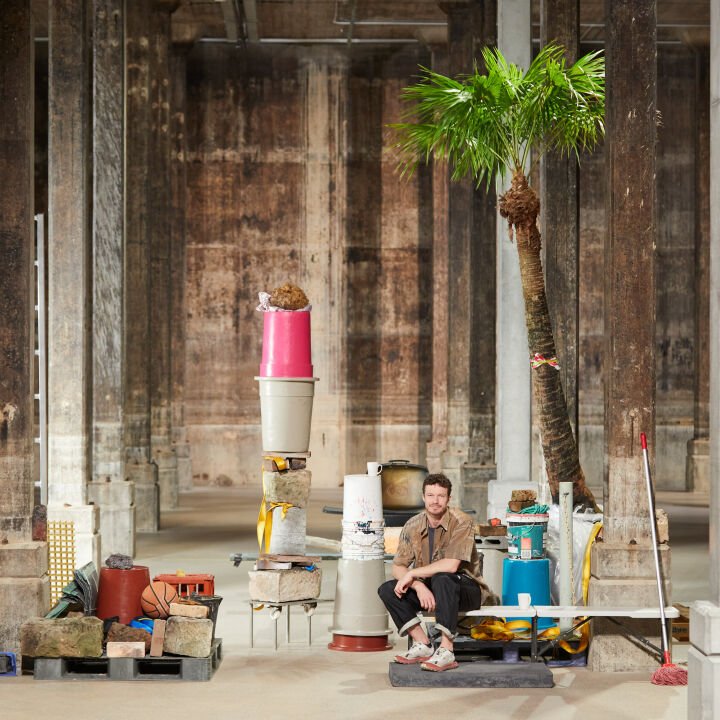
Visitors in 'Mike Hewson: The Key's Under The Mat' in the Nelson Packer Tank at the Art Gallery of New South Wales, artworks Mike Hewson, image Art Gallery of New South Wales, Mim Stirling
I met Mike Hewson during the Earthquake recovery period in Ōtautahi Christchurch. He was beginning his public artwork project of large-scale printing on architecture fragments, and I was the Director of SCAPE Public Art. These works opened up a dialogue between art and architecture to question the nature of our relationship to civic spaces. That ambitious series temporarily graced the façades of buildings of major cities including Pushkin Square in Moscow.
I have closely followed Mike’s projects with interest. His greatest feat, The Key’s Under the Mat, is a masterclass in community and socially engaged public art practice. It is a boundary-testing social sculpture across a 2,200 square metre space in the Nelson Packer Tank, and came to life under the curatorship of Justin Paton at the Art Gallery of New South Wales.
The ambition is high, with Kiwi number eight wire innovation mentality across the entire project in spades. Mike’s training as an engineer and a conceptual artist come together to refashion and repurpose found items into one large play space for young and old. Mike’s design ingenuity resourcefulness, can-do attitude and ability to think laterally to solve a problem have brought to life artworks, play areas, and places to be. It’s a combination park, playground, barbeque, laundromat, steam room, recording studio, artist in residence space, construction site and commons; all for anyone to use.
For me, this artwork ultimately challenged our perceptions of the gallery environment (especially how we can behave within it), and what is public art. It is free to the public to enter, but with limited opening hours because it is not visible from outside.
With over 100,000 visitors since the opening in October, the community’s response to this project is a message to the art institution: this is right on the pulse of what people want from their public art gallery.
In the contemporary art community where everyone is striving for the newest ideas and manifestations to portray our times and the mood of society, Mike and the team at AGNSW have lobbed this one out of the park and beyond the boundaries.
Natasha Smith
Tony Albert (b. Gurrumbilbarra/Townsville, QLD, Australia l. Meanjin/Brisbane, QLD, Australia) and Nell (b. Bo-un/Maitland, NSW, Australia l. Gadigal/Sydney, Australia) | The Big Hose, 2025
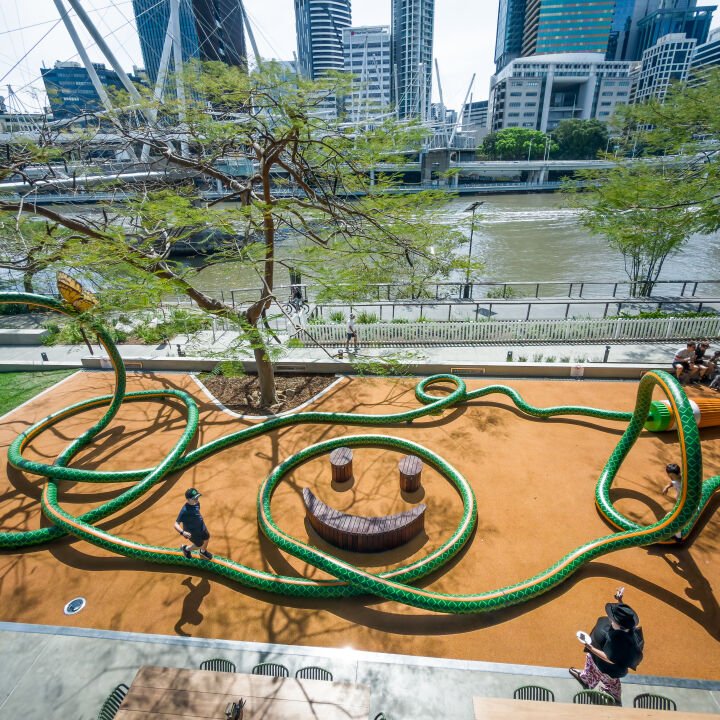
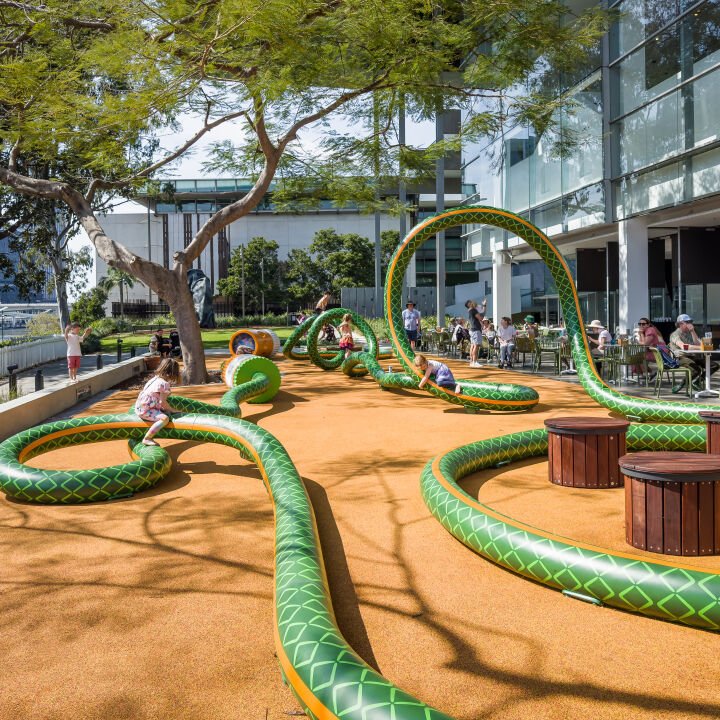
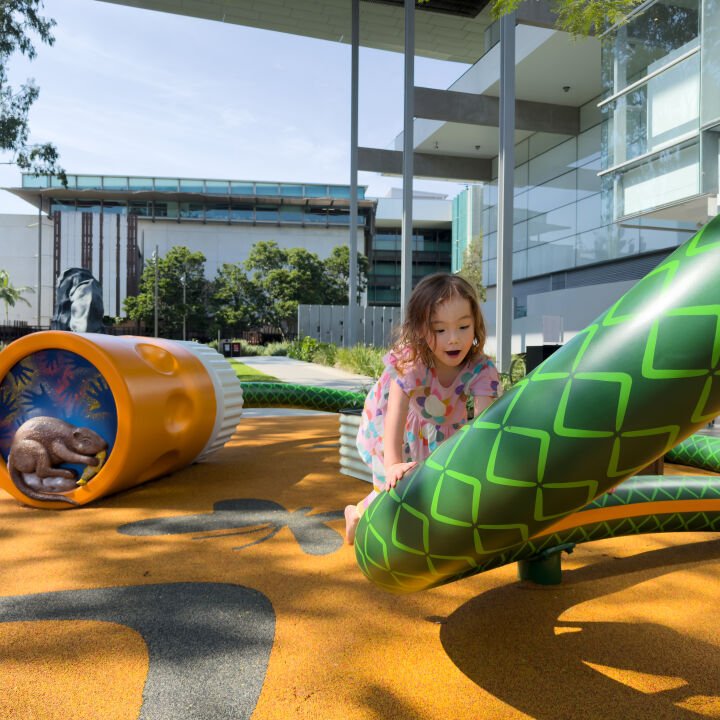
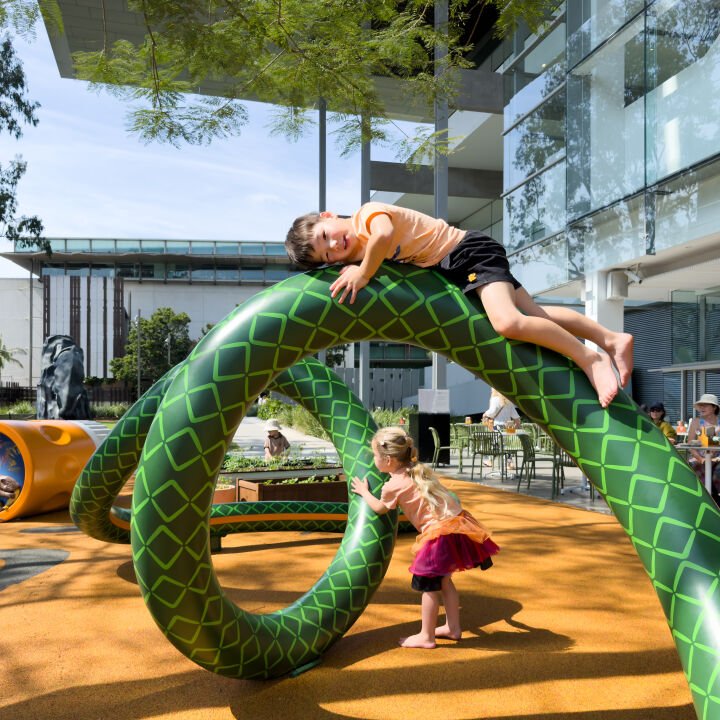
Image Credit: Rachel See, courtesy of UAP | Urban Art Projects
My experience of The Big Hose started in UAP’s meeting room in Brisbane at the workshop. I was taking a break, making a cup of tea at the kitchenette, when my eyes became glued to the strangest maquette I have ever seen…a section of store-bought garden hose, stapled (quite energetically it seemed) to a large piece of plywood in twisting forms. It was magical. It was genius!!!
Tony Albert (Brisbane, Girramay/ Yidinyji/ Kuku Yalanji peoples) and Nell (Sydney), the artists behind this wild new icon of Brisbane, had just left the studio after a morning workshopping with UAP’s design team. Their morning had been taken up teasing out their concept for GOMA's competitive concept invitation for a new public art and play commission, situated along the banks of Maiwar (Brisbane River). This basic maquette was the result and had me absolutely fascinated, albeit a little skeptical. Tony and Nell had never collaborated before but were both incredibly successful and prolific artists individually. This new dynamic duo seemed very un-expected to my curatorial eye, knowing their separate practices as I did, and their idea, as evidenced by this surprising maquette, was clearly bold!
The concept behind The Big Hose speaks to the quintessential Queenslander vernacular (imagine, if you can, that GOMA is a Queenslander), where one might find the garden hose strewn across the front yard after a bit of water play on a hot summer’s day. This hose is supersized to join Australia’s list of ‘big’ things and to take your imagination to new heights. The work is much more layered and nuanced than just this of course, with meanings inspired through local histories of First Peoples, migration and art.
Fast forward to the spring of 2025 when I visited the newly unveiled work and I can say it is very impressive. Measuring 119 meters in length, twisting and looping around the bright orange soft fall ground, it seemed to me like a friendly green tree snake. Its bright surface is adorned with an intricate boomerang pattern (so very Tony), emulating a braided hose design. It is truly a sight to behold, with treasures to discover, like the Lemon Migrant Butterfly who gently perches on its tallest arc, the smiley face wooden seating (so very Nell) and the sleepy ‘Kuril’, water rat, hiding in the cool of the hose connector.
I am such a fan - as a public art curator, as a mother of an 11-year-old and as an adult dreaming of being young once more - it has something to offer us all! I think it is a triumph in un-expected collaboration, creativity and play design. Tony, Nell and GOMA, thank you for bringing this to my ‘back yard’ in Brisbane! (and I am very proud that UAP helped make this beauty).
Danielle Robson
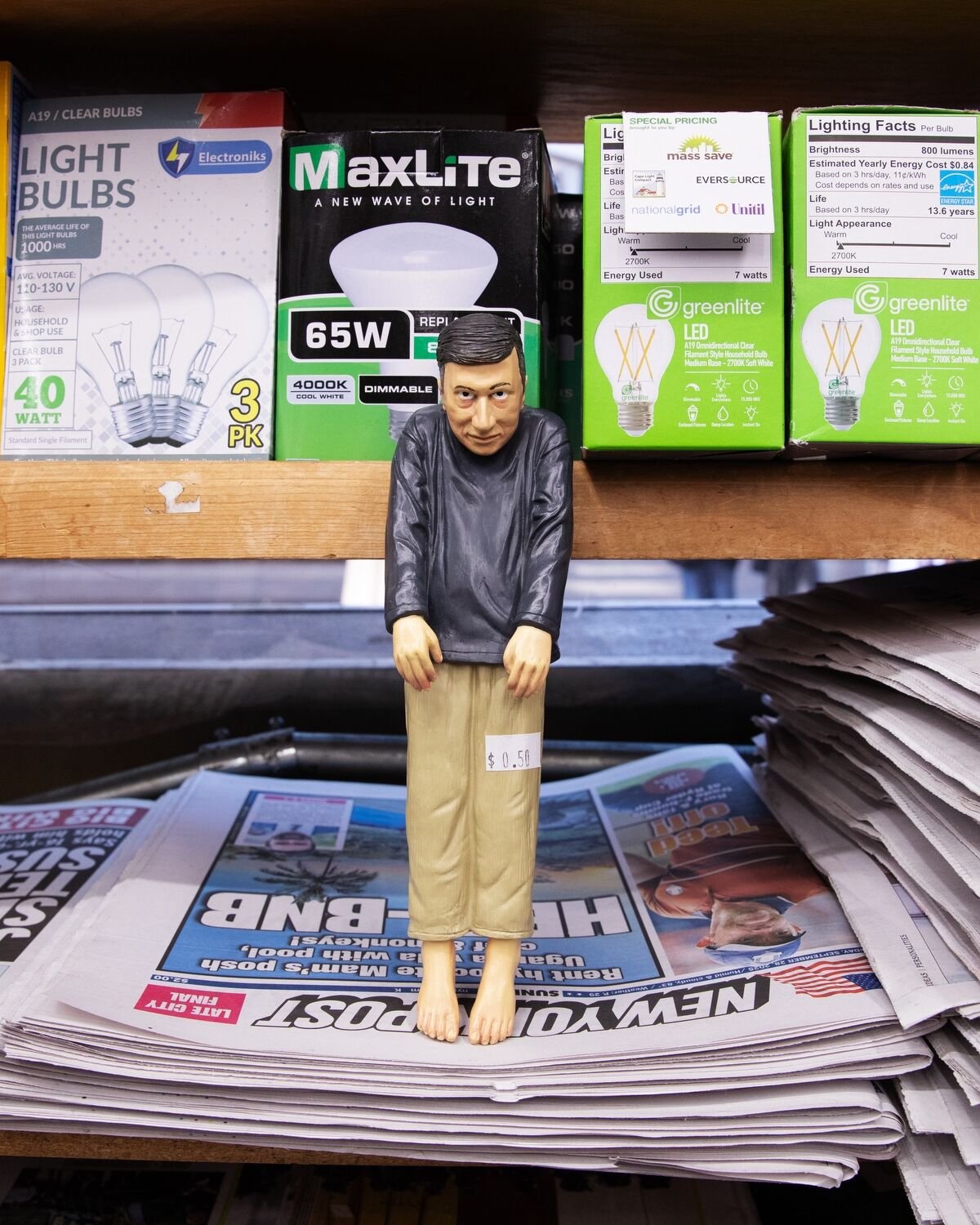
Maurizio Cattelan (b. Padua, Italy l. New York, USA) | Where is Maurizio?, 2025
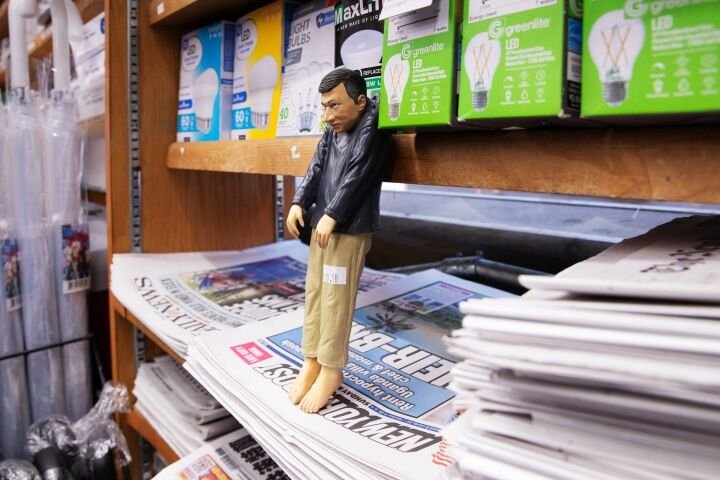
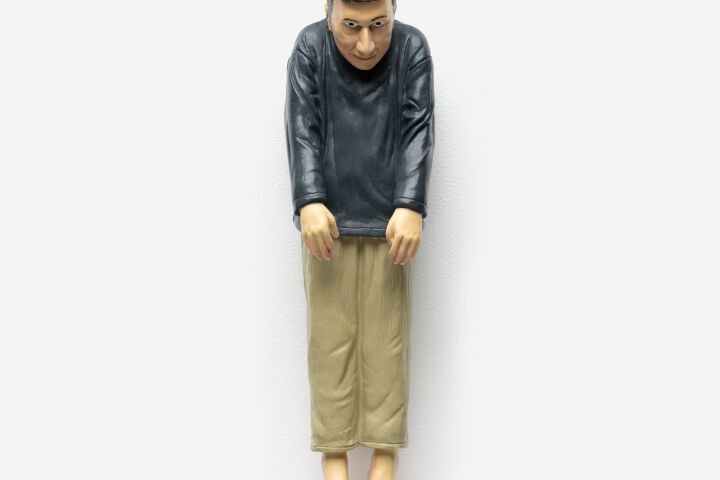
Maurizio Cattelan, We are the Revolution, 2025. Image courtesy of Avant Arte ©Mary Kang
Public artwork, participatory game, marketing gesture, or conceptual prank? Maurizio Cattelan’s Where is Maurizio? was all of the above - and deliberately so. Conceived as an international treasure hunt, the project was commissioned by Avant Arte, unfolding online and in real time between 30 September and 7 October 2025.
Three hand-painted miniature self-portrait sculptures by Cattelan were discreetly placed for sale in everyday retail settings: a New York bodega for $0.50, a London fruit stall for £0.99, and an Amsterdam antique shop for €5.00. This radical repositioning stood in stark contrast to the editioned works’ gallery price of €1,500, humourously subverting notions of value, access, and authorship in the art market. Digital clues to each sculpture’s whereabouts invited global participation: the New York piece could be purchased in person, while the London and Amsterdam works were sold via an online entry form stating the correct location. The first find - resting on a newspaper in a Soho corner store - occurred within two hours of a nondescript image being shared online.
Cattelan is renowned for his incisive, satirical practice that interrogates and destabilises the hierarchies of the art world through wit and provocation. When developing his idea for Where is Maurizio?, his duct-taped, store-bought banana work, Comedian (2019), had recently sold at auction for $US6.2 million. America (2016), Cattelan's fully operational toilet cast in solid gold was also making headlines, and at the time of writing, has just sold for $US12.1 million.
For the 11,000 participants who hunted for a ‘bargain’ artwork, there were countless others who may have seen the small, hunched figure for sale while going about their day, unknowingly missing the chance to acquire an 'art jackpot'. It is within the fine grain layers of the work, where value is exposed as a constructed fiction, that Cattelan’s intellectual rigour and critical acuity are revealed. Beneath the guise of play in Where is Maurizio? lies a quiet insurgency, one that finds currency through the theatre of public art.
Public Art in Review invites readers to explore the transformative power of public art through a collection of striking visuals and insightful essays from leading thinkers in the field. This beautifully illustrated volume highlights how public art enhances urban spaces and fosters social dialogue, making it an essential addition to any art enthusiast's library. To deepen your understanding and appreciation of this dynamic intersection of creativity and community, purchase the book here: Buy Public Art in Review.
Please note that the works highlighted do not imply that UAP produced them; instead, they represent a collection of noteworthy contributions in the field, as chosen by the curators. This year's highlights showcase a diverse range of artistic expressions across various communities, emphasising the importance of public art in enhancing cultural identity and community engagement.
#Related Articles
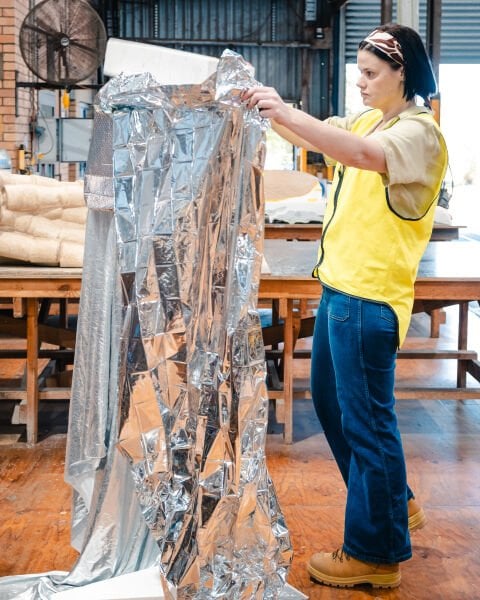
Holding Space: Amanda's Search for Softness in a Hard World
In this interview, emerging artist Amanda opens up about her evolving practice—one rooted in lived experience, digital technology, and material exploration.
Interviewed by Tess Bakharia | Assistant Curator
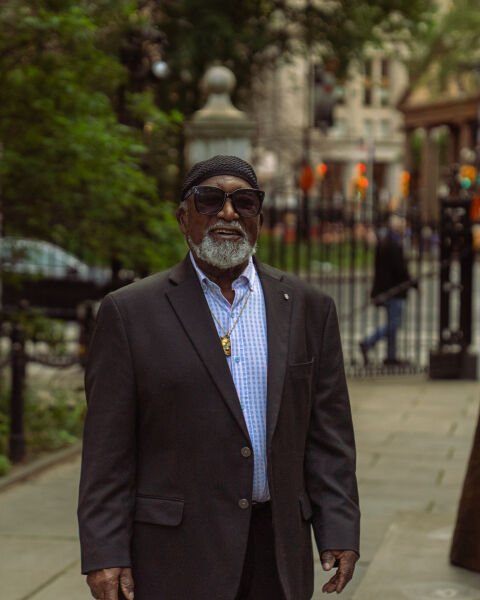
Carving Legacy in Bronze
At 99, Mosley continues to shape form and memory—his first outdoor New York City exhibition reveals a dialogue between nature, artistry, and craftsmanship carried into permanence.
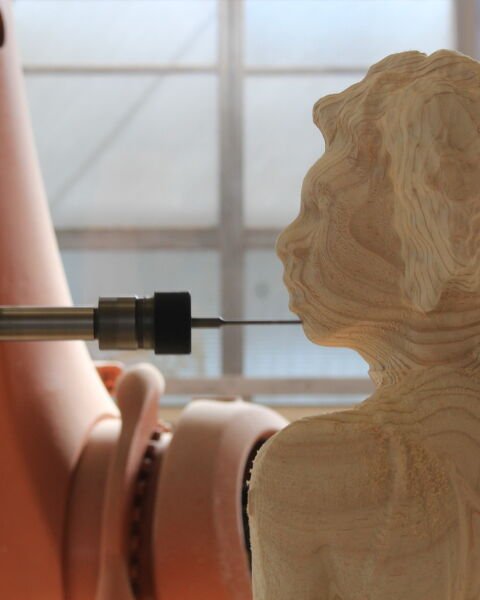
Artwork Ingredient List
UAP, in collaboration with Future Normal and Carbon Footprint, Launched the Artwork Ingredient List – a Tool That Calculates an Artwork's Carbon Emissions