Beyond the Games: Public Art and the Making of Cultural Legacy
Hosting a major global event means a city not only welcomes the world but also gets the chance to show something of itself. Major global events give cities a rare opportunity to present themselves to the world. Events such as the Olympic and Paralympic Games, World Expos, and others create moments of heightened visibility, during which architecture, infrastructure, public spaces, and cultural offerings shape how millions of people experience and understand the host city.
Major events have a remarkable capacity to trigger widespread civic change at a speed and scale that surpasses business-as-usual city-making. New sports facilities are constructed. Transport networks, green spaces and urban infrastructure are expanded and improved. Entire neighbourhoods transform in a matter of years.
But what happens after the crowds leave and the spotlight moves on? What remains for the people who call the city home, and who will live with the outcomes of these urban planning decisions for the next twenty, thirty, or fifty years?
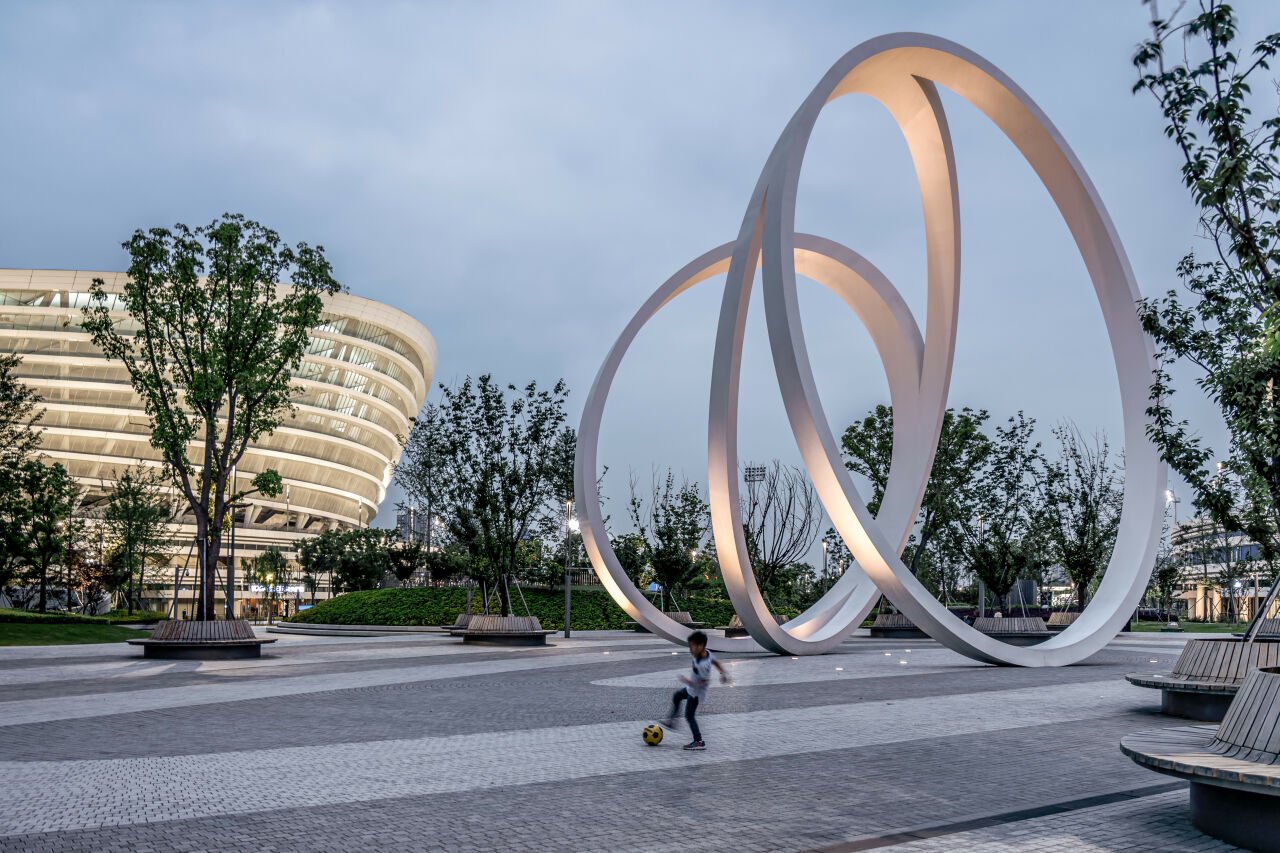
Three Rings by Daniel Templeman
In the heat of planning ahead of a major event such as the Olympics, it is natural that the measure of investment is centred on infrastructure legacy and the long-term benefit to future communities. However, equally important and requiring a similarly long lead time is carefully considered cultural legacy planning.
Public art can play a powerful role in shaping a city’s cultural legacy by giving tangible form to the stories and character - the intangible substance - of a place. When public art is part of the conversation from the beginning, cities have the opportunity to embed cultural storytelling into the fabric of a place that will continue beyond a temporary cultural moment. Early thinking shifts the conversation from “Where should the artwork be placed?” to “How can artists shape how people experience and remember this place?”
The potential and power of long-term cultural legacies should drive the urban decisions being made today.
‘’When I think about civic legacy building, I think about Expo 88 in Brisbane, and all it has done for our great city. The entire cultural precinct of Brisbane, including the Queensland Art Gallery and Queensland Performing Arts Centre, stand adjacent to the grounds that were the foundation of Expo 88, and our much-loved and always populated, South Bank parklands, now adorns the site. Much of the city’s outdoor art collection came about due to contributions from Expo 88, which fundamentally redefined Brisbane and accelerated its cultural trajectory for future generations.
When I reflect on great Olympics through a city shaping lens, my mind immediately goes to Rio. Despite facing challenges, as the first Olympic Games held in South America, at a time of economic downturn, Rio 2016 created lasting benefits for Rio de Janeiro and the Brazilian people. The event transformed the city with significant improvements that continue to echo today. Culture shone through, and art was highlighted front and centre during and after the Games. JR’s unforgettable photographic Giants installation series displayed across scaffolded building armatures acted like super-sized murals broadcast around the world, shining a light on lesser-known athletes and the mid-action events, ensuring equality for the Games. The legacy of the Porto Maravilha regeneration, which is home to the Rio Art Museum, turned the district into an open art gallery and a lasting cultural destination which remains a major tourist attraction for Rio.
Expo 88 Brisbane and the Rio Olympics 2016 both had a vision for the importance of balancing the immediate Games and the ‘long game’ by planning for how the city can continue to function and flourish into the future. Events of this nature are a coming of age for any city. It is a moment to celebrate, but it is also a new beginning and the sign of a city maturing into another great stage of civic life. Civic life is defined by the people (residents and visitors alike), so the city needs to be shaped to support and inspire the people. Public art is one of the greatest catalysts for this kind of engagement and can truly come to define a place over time.” —Natasha Smith, Partner and Director Curatorial, UAP
The examples from Australia's past experience of hosting large international events offer valuable lessons. The World Expo of 1988 was a turning point for Brisbane, bringing art, architecture, landscape and cultural activities together on a site that is now part of South Bank. Art was integral to the Expo, and some of the public art from that time still appears in Brisbane's cultural landscape. Sydney 2000 showed yet another aspect of this possibility. Together with the sporting events, the Olympic Arts Festival gave Australian culture a platform for international and local audiences to experience it. Tubowgule (The Meeting of the Waters), with creative direction from the late Rhoda Roberts and Stephen Page, and produced by UAP, welcomed the public with a program based on First Nations culture, performance and place. Although the situations in 1988, 2000 and the present day are very different, they show how a short-lived global event can act as a catalyst for cultural expressions that have a much longer life – as seen in the illustrious careers that these individuals went on to have, and that were widely embraced by audiences local and international.
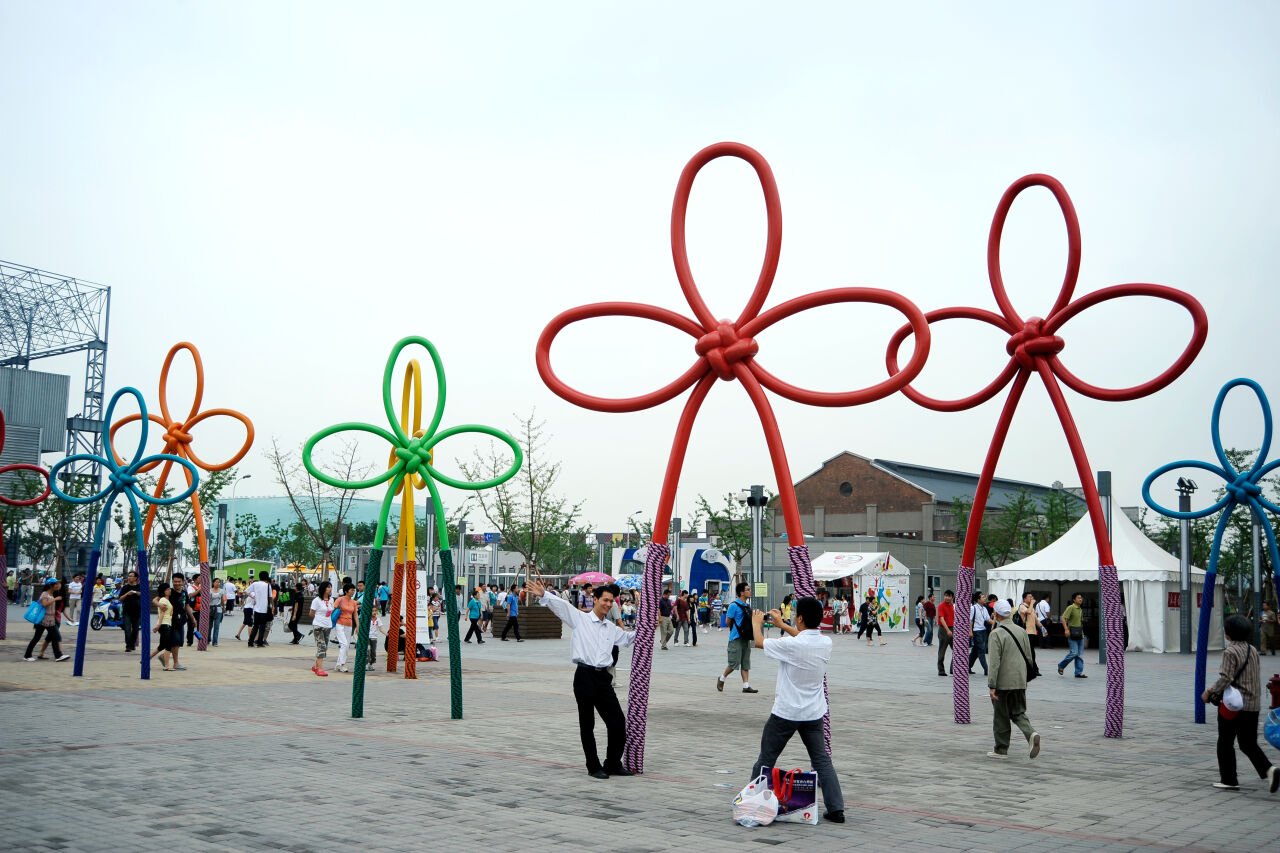
Weave by UAP Design
This history also shows an important principle: Lasting cultural legacy begins with the place, not the event. Public art doesn't need to develop into a universal language based on monuments, sports symbols, or branding. It can, in fact, have a much more diverse role: it can bring to light histories that would otherwise stay unseen, surface ties with the Country, reflect the changing character of communities, and offer artists the chance to interpret the city in ways that architecture and infrastructure alone cannot. The aim should not be to produce an artwork that immediately informs future generations that an Olympic Games took place here. Rather, the aim should be to create work with sufficient relevance and connection to the local area so that it remains important once the event itself has become part of the past.
“Curators working in the public realm carry a responsibility to both current and future publics. As key voices in the early stages of the commissioning process, they help uncover and articulate the stories of a place, laying the foundation for meaningful site-responsive artworks. In their role as trusted researchers and advisors, curators also champion ambitious new works that balance conceptual rigour with artistic excellence. When conceived with intelligence and sensitivity, public art transcends passing trends, becoming part of the cultural fabric of a place and resonating for generations to come.” —Danielle Robson, Head of Curatorial (Australia)

The Big Hose by Tony Albert and Nell
This way of thinking has developed within modern sporting areas.
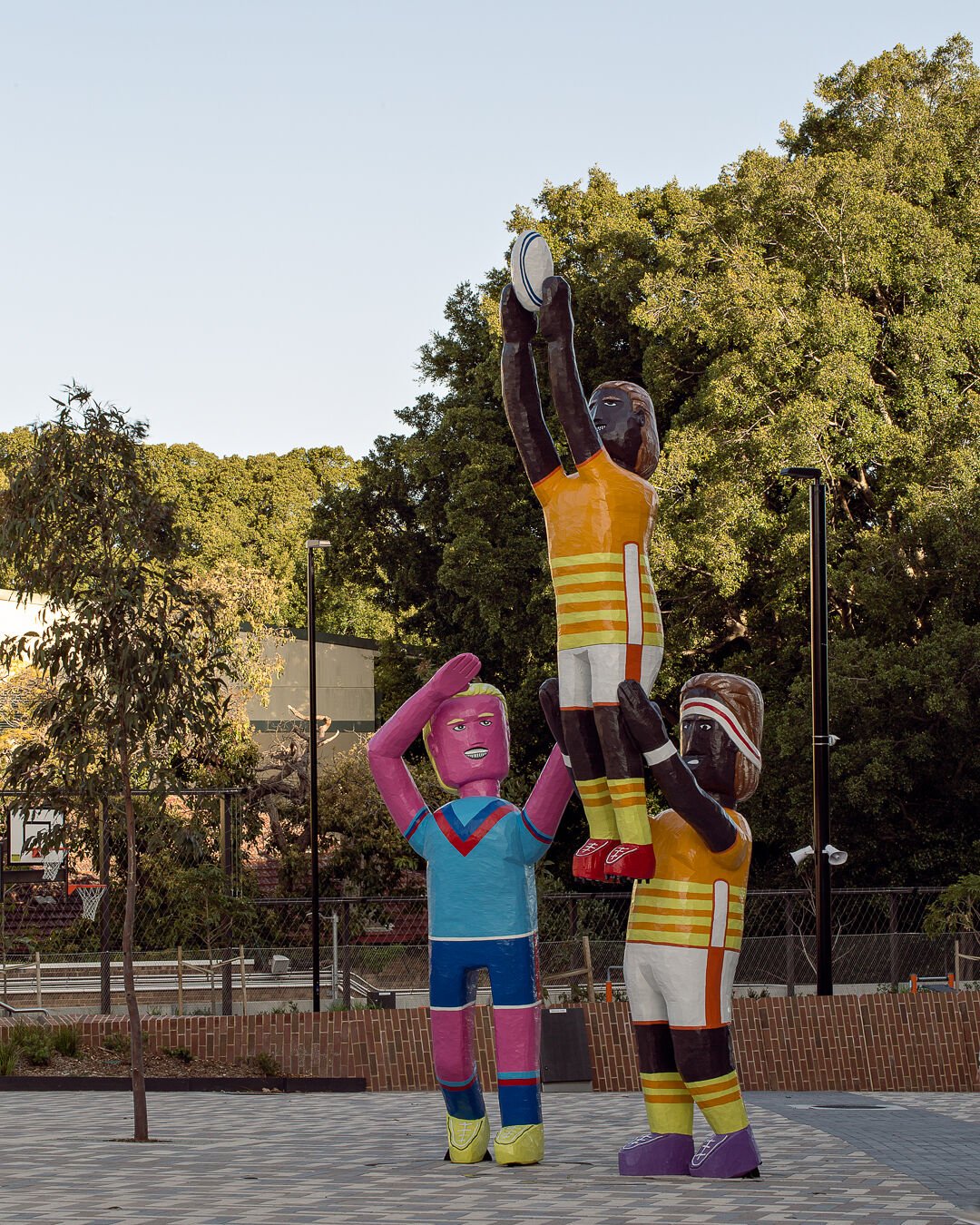
At the Sydney Football Stadium, Dinni Kemarre Kunoth's piece One Big Mob, All Mixed Up represents afternoons spent bonding in the remote Australian outback over a friendly or not so friendly match, the fierce pride that comes with watching your team win and the friendships forged through a universal love for sport. The work uses the common language of sport to address broader notions of community, equality, and belonging.
At Perth’s Optus Stadium, Barry McGuire’s Waanginy Boorna – Message Stick connects an ancient Wadjuk cultural tradition to the stadium that serves as a place of gathering. Traditionally used to invite nations together, the message stick carries ideas of welcome, ceremony and community into the public realm.
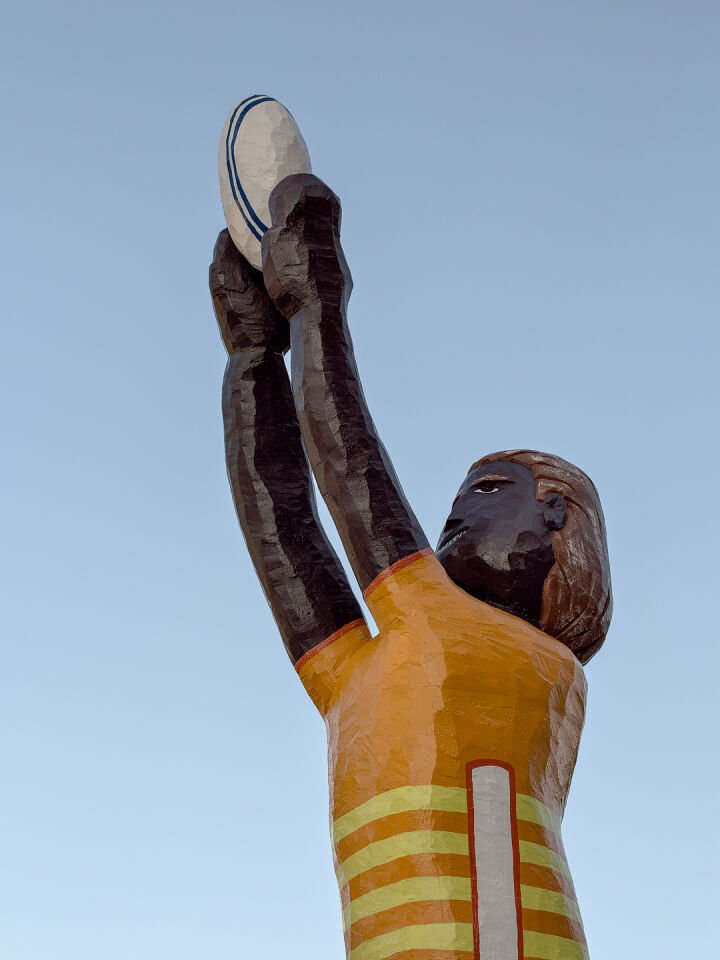
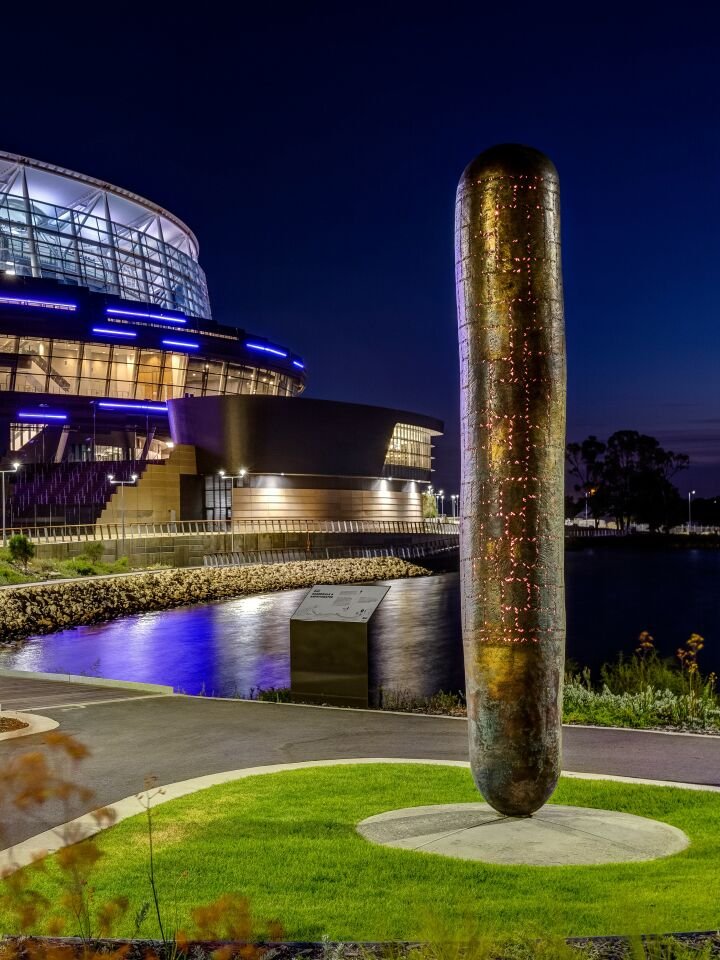
One Big Mob, All Mixed Up by Dinni Kemarre Kunoth and Waanginy Boorna- Message Stick by Barry McGuire
Across projects of very different scales and contexts, a few themes keep recurring.
Culture needs to enter early to influence how people actually experience the place.
Local relevance matters more than event branding. Work grounded in an artist’s practice, community, culture and place has a much better chance of remaining meaningful once the banners and broadcast infrastructure are gone.
Legacy requires foresight. Materials, maintenance, ownership and the long-term life of an artwork have to be considered alongside concept and commissioning. A cultural legacy is only successful if the work can continue to belong to the place decades later.
The importance of these works goes beyond the settings where they are located; they show how public art can help shape an area's identity while enabling the public to connect with stories greater than any single event or tournament. In this way, public art functions as a kind of cultural infrastructure: something that helps people understand, navigate, and form a relationship with a place.
The arrangements for the 2032 Olympic and Paralympic Games will affect Brisbane and surrounding areas through new developments and the revitalisation of existing infrastructure, districts and public spaces. Queensland’s cultural strategy already recognises a role for arts and culture across Games-related infrastructure, precinct planning, urban design and public art. The challenge now is to turn that ambition into places that feel culturally specific, lived-in and meaningful long after 2032.
That involves posing questions which go beyond the needs of the event itself. Which stories from Brisbane and Queensland should be passed on? In what way can Aboriginal and Torres Strait Islander artists, communities and their connections to Country contribute to the creation of new places? How might artists respond to Queensland's subtropical climate, its histories, its communities and its evolving identity? How can new public spaces manage to be distinctly rooted in their local context rather than resembling infrastructure that could fit into any major city in the world? And most importantly, how can the cultural investment associate with the year 2032 bring value to people who may never go to an Olympic or Paralympic event?
“It has been incredibly inspiring to be part of the groundswell of activity and conversation among architects, designers and developers in the lead-up to the 2032 Games. The global attention focused on Brisbane provides both the impetus and resources to think creatively about how new projects contribute to the city, and how they can evolve to meet its changing needs well into the future.
Already, we’re seeing new precincts designed to attract visitors throughout the day and into the night for the long term, competing through the quality of their cultural, landscape and retail offerings. In the years beyond 2032, the most successful projects will be those that have confidently established their points of difference — whether through enduring design, an always-bustling public realm, or artworks that capture our imagination and continue to champion the unique histories and communities of a place. In responsible hands, the significant investment being made in culture and infrastructure today has the potential to transform not only how Brisbane presents itself to the world in 2032, but how people experience and continue to shape the city for generations to come.” —Benjamin Clay, Senior Associate, UAP
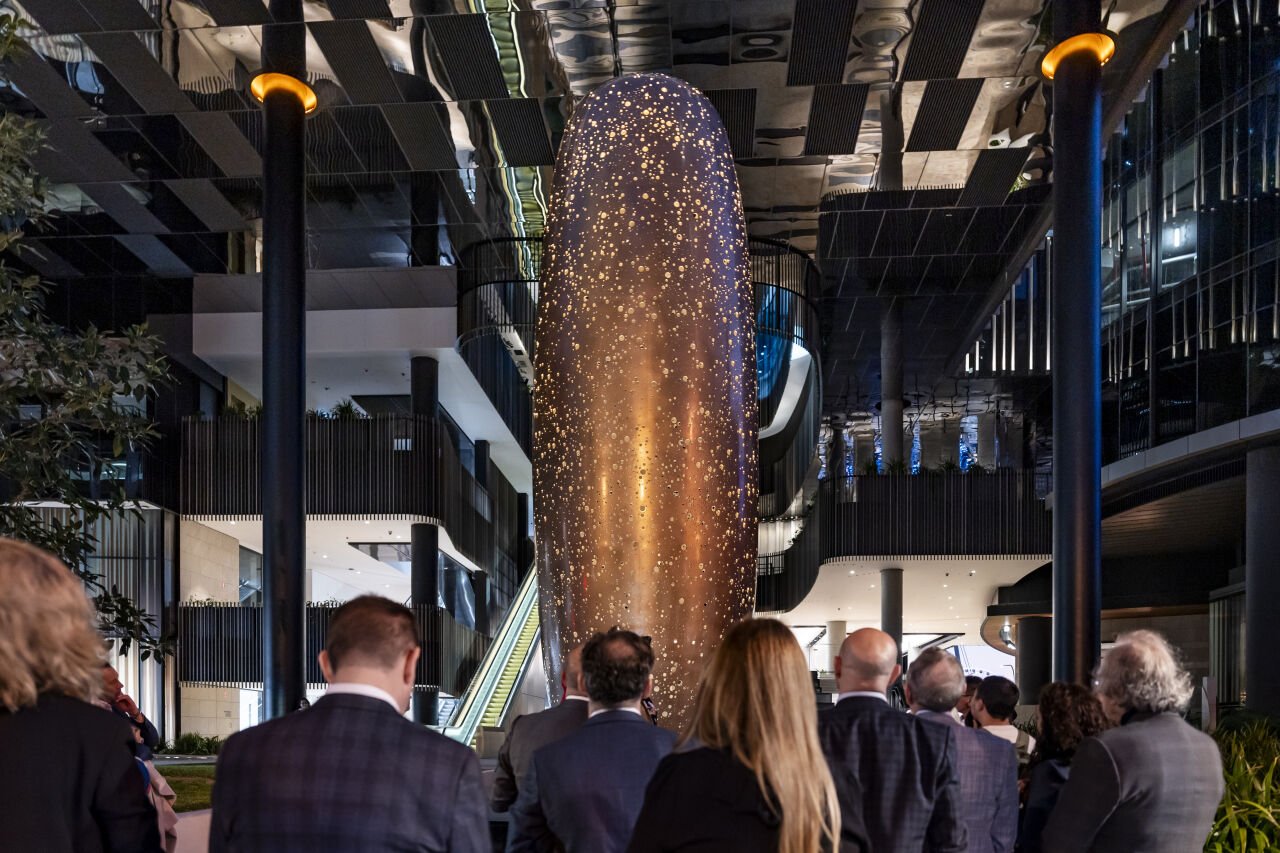
Being Swallowed by the Milky Way by Lindy Lee
Artists alone cannot answer these questions, and public art should not be viewed in isolation. A meaningful cultural legacy can only be achieved through cooperation between artists, Traditional Owners and communities, as well as curators, architects, landscape architects, designers, engineers, fabricators and the organisations that will oversee looking after these places for the long term. Moreover, public art needs to take part in the discussion early on to influence how a place is conceived, rather than reacting to decisions already made. Only when cultural considerations are incorporated into the planning process can public art go beyond merely occupying space and instead actively contribute to the character of the place.
This might be one of the most important opportunities major global events bring, since they have deadlines that create urgency, yet their lasting impact requires a much longer time horizon. Although the opening ceremonies occur on a specific night, the competitions run for a few weeks, and venues must be ready by a set date, the relationship between a public artwork and a city can persist for many generations.
For the Brisbane 2032 Olympics and Paralympics Games, the opportunity is greater than producing art for the Games. It lies in using this remarkable phase of investment, public attention, and ambition to create cultural experiences that will be part of Brisbane and Queensland long after the international attention has turned to other places. The most significant cultural legacy could finally be an artwork, a public space or an experience which future generations never immediately associate with the Olympic Games; rather, it will have simply become part of the city—part of the way people meet, remember, come to understand their environment and pass on the story of where they live.
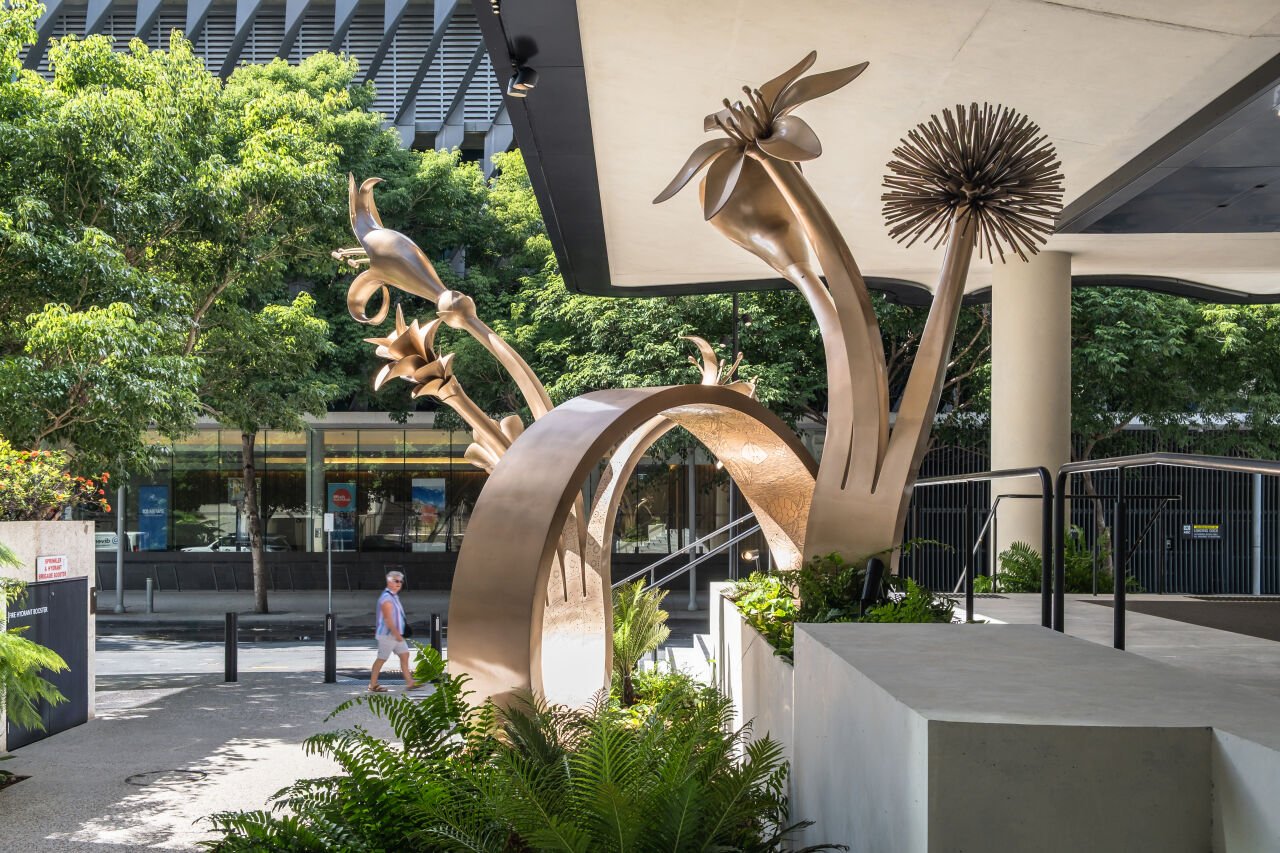
Floriate by Brian Robinson
#Related Articles

Lindy Lee's Eye of Infinity at Hong Kong's Peak Tram
The Peak Tramways Company, Limited is delighted to unveil a stunning public sculpture, named Eye of Infinity by Australian artist Lindy Lee. This 10-metre tall sculpture is inspired by Hong Kong's “spirit of ascension.

The Best Public Art of 2018
For the third year running, the art-and-design studio and foundry UAP has compiled a list of the most compelling public artworks and initiatives around the globe.

Sarah Sze Embeds Mirrored Installation into Storm King Art Center's Landscape
Sarah Sze has created an 11-metre-wide concave sculpture to capture a pool of reflected sky in the dirt at Storm King Art Center. The work, entitled Fallen Sky, is made up of 132 individual elements with surfaces of mirror-polished stainless steel.